
A Printer with Too Many Air Compressors
Blue Mountain Air Compressor Services was founded in 2007 by Tom Yaukey in Chambersburg, PA, as a one-man operation. Yaukey started by serving a handful of smaller customers he had built relationships with over the years. By 2021, the company had grown to 11 employees and was ready for its next chapter: making a strategic push into the large horsepower air compressor market and becoming a Kaishan distributor. That decision led to this case study, where a custom printer based in south-central Pennsylvania not only saved money, but also freed its maintenance staff to focus on production equipment.
A Custom Printer with Too Many Air Compressors
The job started in the fall of 2021 with a phone call from the customer looking to purchase a 100 horsepower (hp) air compressor. The customer had been running several smaller air compressors and wanted to consolidate to two main air compressors. The company scheduled a time to visit the customer to determine the specifics of its compressed air system before providing any quotes.
When the company arrived at the facility it quickly saw the challenge it faced. The customer was intermittently operating a staggering 11 air compressors scattered across its facility. Its system was a patchwork of different air compressor sizes and technologies, including two 25 hp fixed-speed rotary screw air compressors, one 30 hp fixed-speed rotary screw air compressor and one 100 hp fixed-speed rotary screw air compressor as its primary air compressors. It also kept several 15 to 50 hp reciprocating air compressors on standby, turning to them when primary units were down for maintenance. Often, these backup air compressors failed to start or run properly.
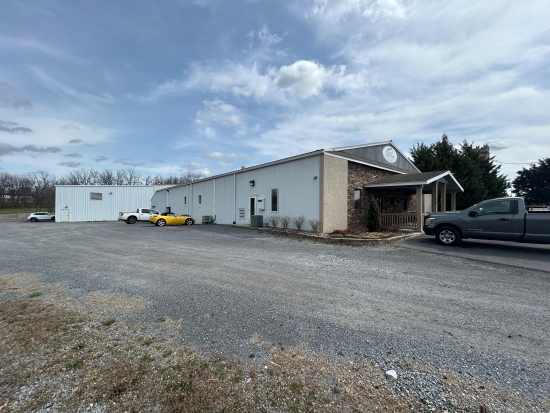
Blue Mountain Air Compressor Services headquarters in Chambersburg, PA.
The way the customer’s compressed air system was set up made it impossible to manage efficiently. Air compressors were often left running unloaded during low production times, using electricity without delivering any value. Air compressors were spread out across the facility, which made monitoring difficult and routine maintenance inefficient. Three air compressors lacked modern auto-standby features, allowing unnecessary runtime. Other air compressors were frequently started in the wrong operational mode, creating inefficiencies. Air compressors were set to load at 115 psi (7.9 bar) and unload at 125 psi (8.6 bar). However, with no central control system each machine ran independently, fighting for control based on its own discharge pressure sensor. This led to inconsistent compressed air system pressure and unnecessary wear and tear on the air compressors.
The maintenance team, despite its best efforts, was overwhelmed. With so many different air compressors of various ages, it was caught in a reactive cycle of waiting for things to break and then scrambling to repair them or simply starting another of the 11 air compressors. Preventive maintenance was impossible to maintain. As is often the case, no one had time to stop and ask why the facility had so many air compressors. In many manufacturing facilities, the health of the compressed air system equipment is thought to be satisfactory if the required plant air pressure is maintained.
Compressed Air System Audit Provides a Clearer Picture
To get a clear picture of what was happening, Blue Mountain recommended conducting a compressed air audit. The compressed air audit was completed over a 14-day period using test equipment and software that looked at compressed air system pressure and air compressor voltage and amperage. From that information, software calculated system efficiency and air compressor power consumption, as well as the minimum, maximum and average air consumption values. The maximum peak air consumption values ranged from 800 cfm on first shift to 400 cfm on third shift.
The compressed air system audit uncovered exactly what Blue Mountain had seen previously: The air compressors were poorly sequenced and far too reliant on old technology. During third-shift operations, two air compressors were left running without being needed. At other times, air compressors operated far below their capacity while cycling inefficiently.
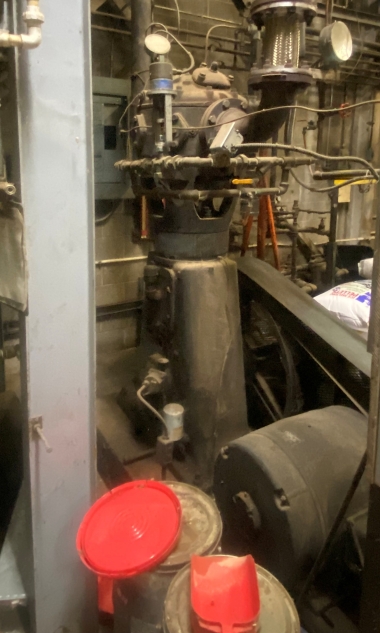
The plant’s compressed air system included this older reciprocating air compressor.
One Recommendation for a Variety of Applications
Based on the compressed air system audit, Blue Mountain recommended the customer invest in a 200 hp variable speed drive (VSD), rotary screw air compressor. The recommendation was based on several factors: Pairing a new 100 hp VSD air compressor with the existing 100 hp fixed-speed air compressor would lead to inefficiencies, as the VSD air compressor would frequently reach full capacity while the fixed-speed air compressor would load and unload – especially during second and third shifts. The 200 hp VSD air compressor offered a capacity range of 231-922 cfm at 125 psi (8.6 bar), ensuring it could meet all production demands across all three shifts without running unloaded or being fully loaded.
Based on the average system flow calculations, the 200 hp VSD air compressor would operate primarily between 55% and 70% capacity. It would thereby maximize energy savings by staying within the optimal efficiency range of its specific power ratings. This larger air compressor would provide flexibility for future production changes, allowing for increases or decreases in demand without requiring another air compressor purchase, all while eliminating multiple inefficient air compressors and lowering energy consumption.
Facility Maintenance Tips for Improved Performance
The time from Blue Mountain’s first meeting with the customer to its new air compressor and refrigerated compressed air dryer becoming operational was five months. Once the equipment order was placed, the task of making room for the 200 hp air compressor began. Three of four reciprocating air compressors needed to be removed. The new refrigerated compressed air dryer would be placed where the existing compressed air dryer sat. Local contractors removed the three older air compressors, then repaired and leveled the concrete pad where the new air compressor would sit. The customer decided to use its existing air storage tank due to space and budgetary restraints, so only a 50-foot section of three-inch compressed air piping needed to be installed from the new air compressor to the compressed air storage tank manifold. Additionally, a piping modification was needed to adapt the new refrigerated compressed air dryer to the existing air header.
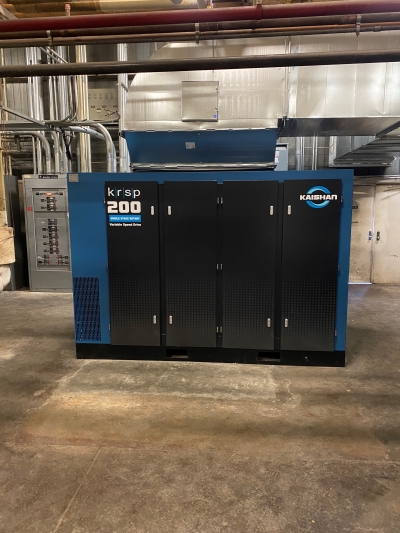
A 200 horsepower VSD rotary screw air compressor.
Throughout the process, the company emphasized key maintenance tips every facility should follow. Stick to a routine preventive maintenance schedule, even if the compressed air system appears to be running optimally. It is easier and less expensive to prevent failures than to react to them. To show the importance of this practice, consider the cost of one lost production hour compared to the cost of an hour of preventive maintenance.
A compressed air system preventive maintenance program should include, at a minimum, the following items: taking routine oil samples; cleaning and testing condensate drain valves; cleaning coolers and changing the air filters, oil filters, oil separator and oil per the air compressor manufacturer’s guidelines.
Dirty coolers can result in airend discharge temperatures running above the rated oil temperature – on average 200°F (93°C), depending on the specific brand – which can result in premature oil failure and higher maintenance costs. Compressed air systems naturally accumulate moisture, which can damage production equipment if not effectively managed. Therefore, it’s important to test and clean all condensate drain valves in the compressed air system routinely.
Every manufacturing facility should include routine inspection and repair of compressed air system piping as part of its preventive maintenance schedule. Compressed air system piping and production equipment leaks can result in losses of 20% or more of system capacity, depending on the compressed air system size and application. The best time to identify compressed air system piping leaks is with the compressed air system pressurized and production shut down. All compressed air system leaks not repaired contribute to decreased compressed air system efficiency and increased operating costs.
Blue Mountain also explained the importance of proper compressed air system controls and equipment setup. For the customer’s newly installed single air compressor primary compressed air system, the setup was simple. After reviewing production equipment pressure demands, the compressed air system target pressure was set to 115 psi (7.9 bar), which has been steadily maintained due to the sizing of the VSD air compressor coupled with the compressed air system demand. As for the customer’s old system, it should have included a sequencer operating from a centrally located pressure switch. This would have allowed various air compressor priorities to be established based on specific production demands. Always keep in mind, whether operating a simple one air compressor system or a compressed air system with multiple air compressors, that production demands change. Routinely review the compressed air system and make adjustments as needed. What worked a year ago – or even a few months ago – might not be right today.
Improvements the Customer Could Bank On
For this customer, simplifying its compressed air system saved $30,000 annually in electricity costs, resulting in a three-year return on investment. It also resulted in a 15% increase in time spent on production equipment maintenance. The customer now has a compressed air system that’s easier to maintain and monitor, and ready to grow with the company. Maintenance is free to focus on production equipment repairs and upgrades.
Eight of the original 11 air compressors are still in place, and seven are operational. These remaining operational air compressors are run monthly and whenever the 200 hp VSD air compressor is down for preventive maintenance. These eight air compressors will continue providing backup compressed air until budgetary considerations allow for the purchase of a redundant 200 hp VSD air compressor.
The installation of the 200 hp VSD air compressor has not only delivered substantial cost savings, but also streamlined operations, improved efficiency and reduced maintenance demands. By optimizing the compressed air system, the customer has positioned itself for long-term reliability and flexibility in meeting production demands. As it looks ahead, the eventual addition of a redundant 200 hp air compressor will further enhance system reliability, ensuring continued efficiency and operational success. This project stands as a testament to the value of strategic investing in compressed air system optimization, delivering measurable benefits across energy costs, maintenance and overall productivity.
For more information on Blue Mountain Air Compressor Services, visit https://bmacomp.com.

About the Author
Ken Morris is a Service and Sales Consultant at Blue Mountain Air Compressor Services with experience ranging from industrial plant maintenance and supervision to nuclear power plant operations and maintenance.
To read articles about Air Compressor Technology, visit https://www.airbestpractices.com/technology.
For expert presentations on Air Compressor Technology, visit our webinar archive section at https://www.airbestpractices.com/webinars.



