
Case Study: Aerospace Manufacturer Saves on Material Costs
In the world of industrial infrastructure, unseen systems often have the biggest impact on efficiency, productivity and bottom-line operational costs. Among these, compressed air and gas distribution networks stand as critical lifelines in modern facilities, influencing everything from tool performance to energy consumption. At the heart of many superior compressed air systems are modular aluminum piping networks.
Modular aluminum piping systems are engineered for the distribution of compressed air, inert gases and sometimes vacuum services in plants, warehouses and manufacturing environments. Unlike traditional materials, modular systems consist of precision-extruded aluminum of grade AW-6060 T51 or AW-6063 T5 as defined in ASTM B241 and fittings that push together quickly and securely.
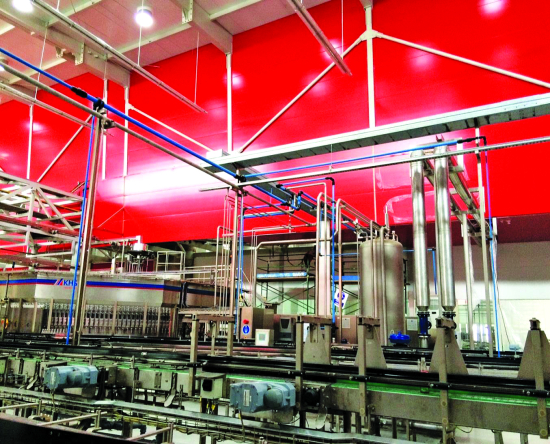
A modular aluminum piping system supplies compressed air for this bottling plant. (Courtesy of Parker-Transair.)
The lightweight nature of aluminum, combined with highly accurate manufacturing tolerances, along with smooth-bore full-flow fittings, allows these systems to deliver significant improvements in flow characteristics and minimize pressure drop compared to traditional piping technologies. Systems install quickly and operate closer to ideal pneumatic performance curves, a benefit paying dividends throughout the life of the installation.
Why Flow and Pressure Drop Matter
To understand the value modular aluminum piping provides, it helps to consider two key performance factors in compressed air and gas distribution:
Flow Efficiency. Air and gas must travel through a distribution network to reach tools, actuators and control systems. In traditional piping, rough interior surfaces and seams can disrupt laminar flow, creating turbulence and robbing the system of effective movement. Turbulent flow increases resistance, which means even with the same air compressor output, less usable flow reaches the point of use.
Modular aluminum piping tackles this by incorporating smooth, calibrated internal surfaces reducing friction and promoting laminar – or streamlined – flow throughout the system. Laminar flow reduces energy losses associated with turbulent eddies and swirling motion in the pipe, enabling more of the compressed air produced by the air compressor to be delivered where it’s needed with fewer losses.
In practical terms, this improved flow can allow a facility to operate with smaller air compressor capacity or delay expensive air compressor upgrades, because the installed piping is not starving tools and machines of compressed air even at peak demand.
Pressure Drop Reduction. Pressure drop – measured in PSID (pounds per square inch differential) – represents the loss of pressure between one point in the system and another. Any time a system experiences pressure drop, the air compressor must work harder to make up the loss to maintain usable pressure at the point of use. Excessive pressure drop means higher energy consumption, more frequent air compressor cycling and increased wear on equipment.
Modular aluminum piping systems address pressure drop in several ways. Their smooth interior surfaces minimize friction that would otherwise slow flow and reduce pressure. Full-bore fittings and valves maintain a consistent flow diameter through joints, eliminating significant constrictions that can otherwise cause pressure loss. Finally, tightly sealing connectors reduces leakage – a common hidden contributor to pressure drop in threaded or welded systems.
Because pressure drop increases with friction and turbulence, reducing either one directly improves system efficiency. Lower pressure drop means the air compressor can maintain the required pressure with less effort. In many industrial settings, even a modest reduction in pressure drop can yield measurable energy savings. An industry rule of thumb estimates lowering system pressure by 2 psi results in approximately 1% energy savings.
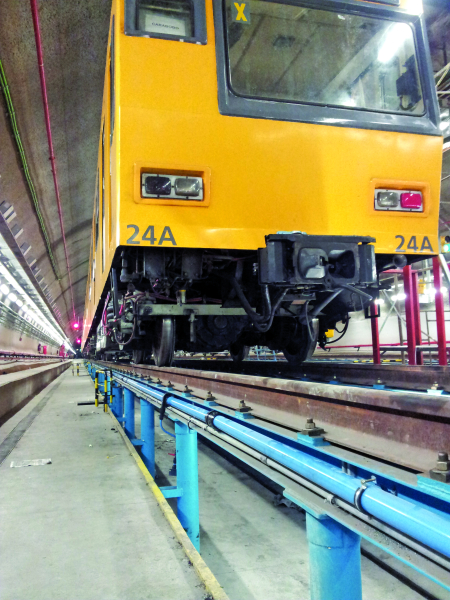
The maintenance shop for this light rail line is powered by compressed air delivered through modular aluminum piping. (Courtesy of Parker-Transair.)
Aerospace Manufacturer Saves on Material Costs
While flow efficiency and pressure drop improvements are central to the value proposition of modular aluminum piping, these systems also provide broader operational benefits due to their lightweight nature, making them easier to handle and fast to install.
Velocity concerns can be mitigated by proper system design. Using a loop system can help maintain reasonable velocity. Leak reductions will also help prevent artificial velocity increases. A piping product with a leak-free guarantee is paramount. Another important factor is having a trained installer who knows how modular systems connect differently from traditional piping systems.
Recently, a major aerospace manufacturer in Texas was setting up its new plant with a 4-inch main line specification based on its engineers’ piping specifications. After evaluating the flow rate, pressure drop and velocity, mdi was able to help this client maintain the same performance using a 2 ½-inch main line in a loop configuration in lieu of a U-shaped compressed air piping system. This reduced its material cost by over 40% and reduced its installation time by 25%. Additionally, we were able to train this client to have its own personnel certified to install its systems, making them totally self-sufficient. This client now uses modular aluminum piping systems in all its facilities.
Because modular aluminum piping is assembled from interchangeable components, adding new branch lines, relocating service drops and expanding the system to new parts of a facility is easier than with rigid welded piping. No welding, threading or heavy fabrication is required, which reduces installation costs and downtime. Adaptability matters in modern manufacturing environments where retooling and layout changes are frequent.
Aluminum does not rust or corrode like steel, a property preserving internal surface integrity and preventing debris and scale buildup. A clean, corrosion-free pipe interior also benefits filters and compressed air dryers downstream of the main header, making routine system maintenance more effective.
Conclusion
In industrial compressed air and gas systems, efficiency isn’t just about producing the required pressure; it’s about delivering usable flow with minimal loss and reasonable velocity as compressed air travels through the distribution network. By minimizing friction, reducing pressure drop and enabling future system adaptability, modular piping systems help facilities operate efficiently, save energy and maintain reliable service to tools and equipment. When combined with expert guidance and strong logistics support, businesses gain not just piping, valves and fittings, but also a performance-oriented distribution partner.
For industrial facilities relying on compressed air to power production, choosing the right piping system is no longer a background decision; it’s a strategic choice influencing energy costs, uptime and long-term facility flexibility.
About the Author

Ryan Freymuller serves as the Sales Director for Manufacturers Distributor, Inc. (mdi), a national supplier of Transair Aluminum Pipe and industrial equipment based in Odessa, FL. In this role, he uses his 30 years of industrial experience to oversee sales initiatives, logistics and technical product training for the company, which has been recognized as one of the fastest-growing private companies in the United States.
About Manufacturers Distributor, Inc.
Since its founding in 2002, Manufacturers Distributor, Inc. has grown into a respected distributor of industrial equipment and systems, serving a wide range of industries dependent on fluid flow technologies. The company’s expertise in modular aluminum piping systems helps facilities optimize flow, reduce pressure loss, get the correct compressed air velocity for their applications and operate more efficiently, resulting in energy savings and more consistent performance in critical industrial processes.
To read similar Compressed Air Piping articles, visit https://www.airbestpractices.com/system-assessments/piping-storage.
Visit our Webinar Archives to listen to expert presentations on Compressed Air Piping at https://www.airbestpractices.com/webinars.



