
Compressed Air Best Practices® Magazine has conducted its first-ever reader survey for this 20th anniversary issue, and the results show a positive outlook for compressed air system sales in the near future.
We surveyed 1,951 Compressed Air Best Practices® Magazine subscribers who work for independent compressed air system sales and service companies in the United States. The goal of our survey is to understand sales forecasts, product line trends and challenges facing revenues. Job titles of those surveyed included territory sales engineers, directors of sales and general managers. The survey was conducted over the last week of March and the first week of April 2026. In all, 89 subscribers responded, representing nearly 5% of the surveyed group.
Survey Demographics
In what U.S. region does your business mostly operate?
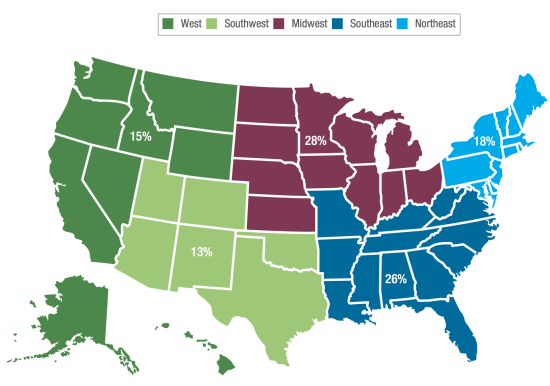
The survey’s first questions look at the demographics of the survey group. The largest block (28%) comes from the Midwest, followed by 26% in the Southeast, 18% in the Northeast, 15% in the West and 13% in the Southwest.
Over half of the respondents are in the Midwest or Southeast, which is understandable given the number of compressed air equipment manufacturers, independent compressed air distributors and manufacturing plants in both parts of the country.
How many total employees work at your firm?
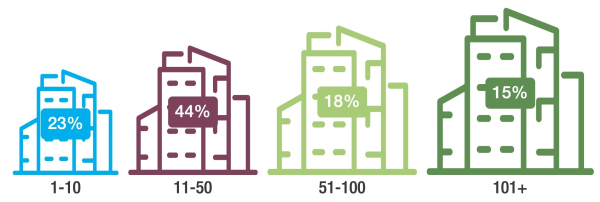
Over two-thirds of respondents work at companies with 50 or fewer employees: 44% have 11 to 50 employees and 23% have 1 to 10 employees. An additional 18% work at companies with 51 to 100 employees, and only 15% work at companies with 101 or more employees.
Company Forecasts and Challenges
Forecast the percent sales revenue change in 2026 compared to 2025 for your firm or territory in all compressed air system products.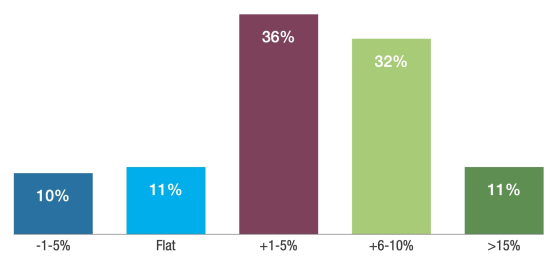
Over three-quarters of respondents forecast increased sales in 2026. Asked about the expected revenue change between 2025 and 2026 for all compressed air system products, 32% said they expected 6 to 10% growth, 36% expect 1 to 5% growth and 11% expected over 15% growth. Only 11% said they expected sales to remain unchanged, while 10% expected sales to diminish by 1 to 5%.
For this question, we dug into the geographies of the respondents to see which region was the most bullish about 2026 sales revenue. The Southwest was the most optimistic, with 92% forecasting an increase in sales. After that, came the Midwest at 83%, the Northeast at 79%, the West at 77% and the Southeast at 65%.
What was the percentage change for each of these product lines over the past 12 months?
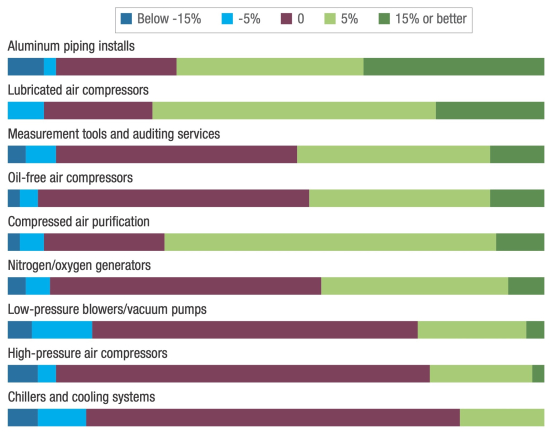
We asked respondents the percentage change for compressed air system components for the previous 12 months. Components showing the strongest increase included compressed air purification products, lubricated air compressors, oil-free air compressors, aluminum piping, measurement tools and nitrogen or oxygen generators. Several product categories showed flat growth – including high-pressure air compressors, low-pressure blowers and vacuum pumps and chillers and cooling systems – but that could be because some respondents don’t carry those products and simply indicated a neutral response.
What percentage change do you forecast for these product lines over the next 24 months?
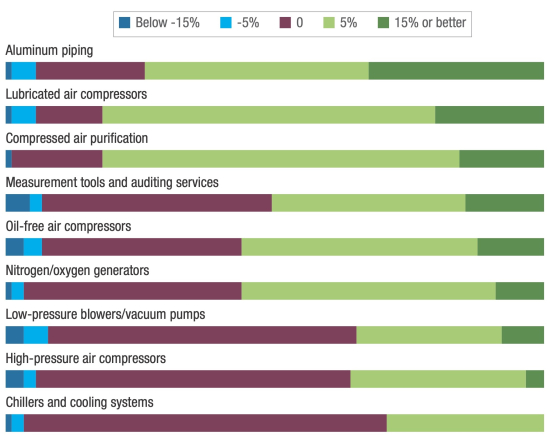
Looking to the future, we asked about the percentage revenue change predicted for compressed air system product lines over the next 24 months. We saw the strongest expectations for compressed air purification, lubricated air compressors, aluminum compressed air piping, measurement tools and nitrogen or oxygen generators.
As with the previous survey question, several product categories – especially low-pressure blowers and vacuum pumps, high-pressure air compressors and chillers and cooling systems – showed largely flat growth predictions. This could be because some respondents don’t carry those products and chose to indicate a neutral response.
How much of a challenge are the following items to your business?
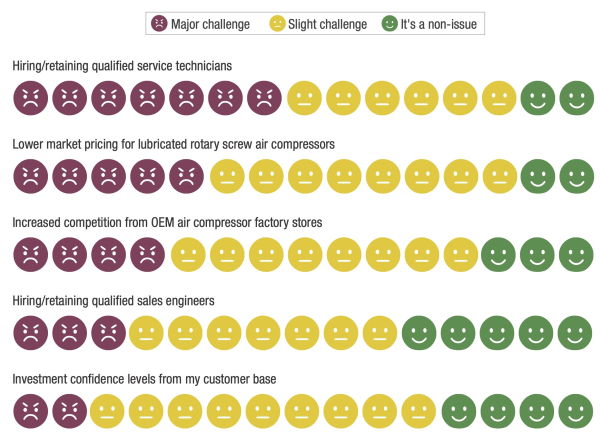
We also asked about the biggest challenges in running a compressed air system sales and service company, and discovered the biggest headache for respondents is hiring and retaining qualified service technicians. That was followed by lower market pricing for lubricated rotary screw air compressors, increased competition from OEM air compressor factory stores, hiring and retaining qualified sales engineers and investment confidence levels from the customer base.
The fact that investment confidence was the lowest-ranked major challenge could suggest healthy demand levels for products.
Does your firm sell chillers and/or cooling towers?
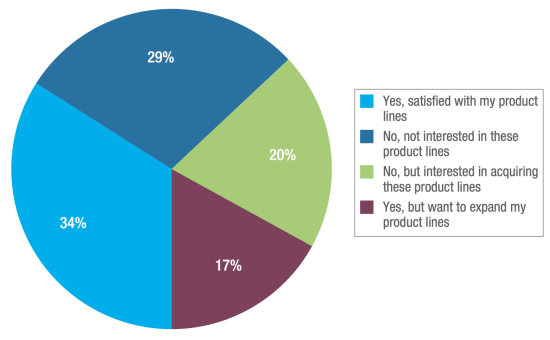
Diversification into cooling systems seems to be establishing itself, with a lot of room for growth. 51% of respondents replied they are already engaged in selling chillers and/or cooling towers. 17% said they’re engaged, but want to expand their cooling product lines. While 20% replied they are not in the cooling business, they’re interested in representing these product lines. Only 29% didn’t carry these lines and weren’t interested in doing so.
Lubricated Air Compressors
Forecast percent sales revenue change in 2026 compared to 2025 for lubricated rotary screw/vane/scroll air compressors (under 25 hp).
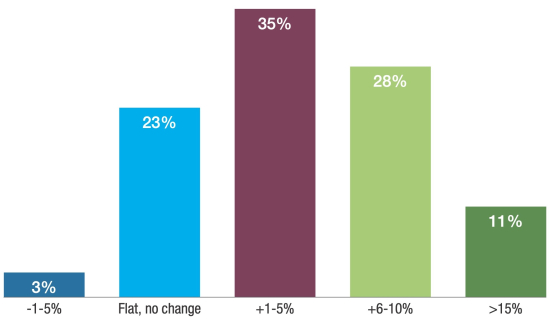
Asked to forecast the sales revenue change for lubricated 25 horsepower (hp) or under rotary screw, vane or scroll air compressors for 2026 compared to 2025, over 74% see sales increasing, with 11% seeing sales increasing by 15% or better. This confirms the long-standing trend of rotary screw air compressors replacing reciprocating air compressors.
Forecast percent sales revenue change in 2026 compared to 2025 for lubricated rotary screw/vane/scroll air compressors (30-200 hp).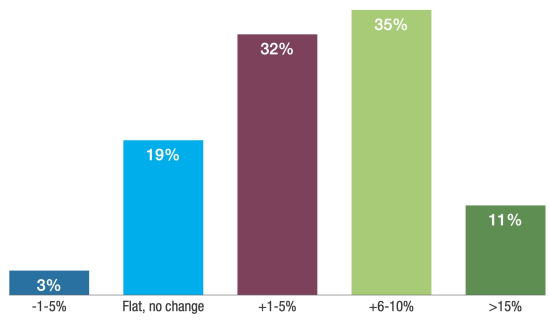
When asked about lubricated 30-200 hp rotary screw, vane or scroll air compressors, over 77% see sales increasing in 2026, with 11% predicting sales will increase by 15% or better. We were pleasantly surprised to see sales growth confidence in larger horsepower machinery sales exceed the confidence in smaller horsepower sales.
Rank from 1 to 5 (1 being highest) the product features most important to buyers of lubricated air compressors (30-200 hp)?
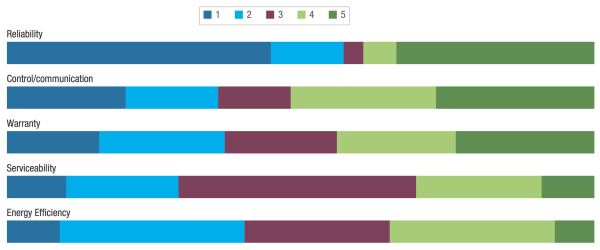
What features are buyers looking for in a 30-200 hp lubricated air compressor? We presented respondents with five options – reliability, control/communication, warranty, serviceability, energy efficiency – and asked them to rank these features in importance from one to five, with one being the most important and five the least important. The results weren’t as clear with this question. Reliability was ranked first or second far more often than the other choices, but it was also ranked fifth more often than the other choices. Perhaps the respondents who ranked it fifth think lubricated air compressor reliability is strong enough across the board that it’s no longer a buying consideration. The other four options received roughly the same number of combined first- and second-place rankings, with energy efficiency narrowly edging out the others. While energy efficiency has the lowest number of first-place votes, it takes the second spot when we add in second-place rankings.
How much of a challenge are the following issues when selling lubricated air compressors (30-200 hp)?
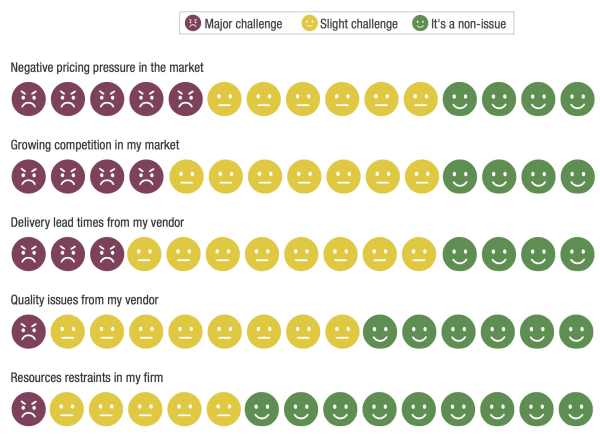
The biggest challenge in selling 30-200 hp lubricated air compressors is negative pricing pressure in the market, respondents said. That was followed by growing competition in the market. The issues of delivery lead times from vendors and quality issues from vendors were more often seen as slight challenges. Few saw resource constraints in their companies as a challenge.
Oil-Free Air Compressors
Forecast the percent sales revenue change in 2026 compared to 2025 for oil-free rotary screw/scroll air compressors.
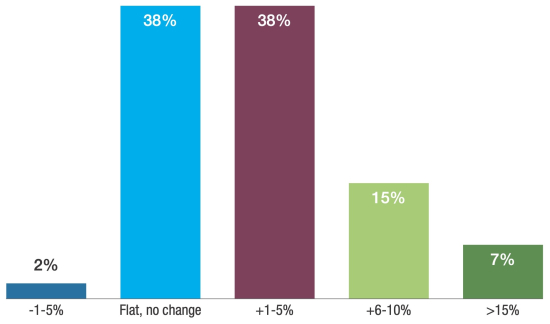
Asked about the expected change in revenue for oil-free rotary screw or scroll air compressors for 2026 compared to 2025, 60% see sales increasing, with 38% forecasting a 1-5% improvement, 15% forecasting a 6-10% improvement and 7% forecasting an improvement of 15% or better. A significant 38% forecast flat sales.
Why is demand for oil-free rotary screw/scroll air compressors growing?
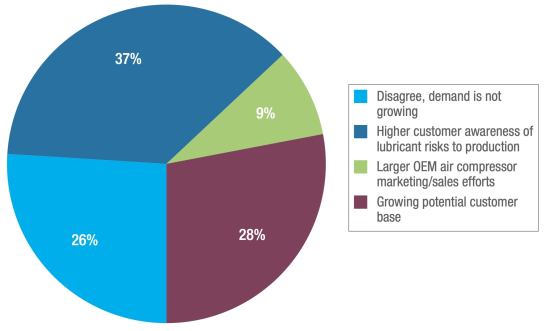
Why is the demand for oil-free rotary screw or scroll air compressors growing? 74% of respondents agreed with the question’s premise, that demand is indeed growing, with the largest share (37%) saying it was thanks to higher customer awareness of lubricant risks to production. Next, a growing potential customer base for oil-free air compressors was cited by 28% of respondents, while 9% said the growing demand for oil-free air compressors is due to the marketing and sales efforts or larger air compressor OEMs.
We’d like to thank all who participated in our inaugural compressed air distributor sales survey and made it a success. This is valuable compressed air industry data unavailable anywhere else, and we appreciate all the respondents who provided confidential insights into their businesses. Congratulations to David Sullivan, President – Industrial Products, Atlas Machine & Supply, the randomly chosen winner of our drawing for a $100 Amazon gift card.
Our next compressed air distributor sales survey will appear in the January/February 2027 issue of Compressed Air Best Practices® Magazine. If you’re a subscriber and work for an independent compressed air system sales and service company in the United States, please watch for an email later this year asking for your participation.
To read similar articles on Air Compressor Technology, please visit https://www.airbestpractices.com/technology.
Visit our Webinar Archives to listen to expert presentations on Air Compressor Technology at https://www.airbestpractices.com/webinars.



