Two Case Studies at a Cosmetics Manufacturer and a Milk Products Plant
In many manufacturing plants, compressed air is a vital utility – powering tools, conveying materials and, in some cases, coming into direct contact with products or packaging. When compressed air is used this way, its quality isn’t just a maintenance issue: It becomes a product safety and quality concern, and could even put the company into legal jeopardy. That’s why ISO 8573-1 was developed: to provide standardized classes for compressed air purity in terms of particles, water and oil to drive the planning and design of compressed air systems in order to deliver the quality desired or required.
Despite the importance of this standard, many facilities make a critical mistake: They assume that simply installing the right filters guarantees compliance. The thinking goes, “We’ve got the right equipment in place; therefore, our air must be clean.” But, without ongoing measurement and verification, this assumption can lead to serious oversights. Filters can degrade, components within systems can accumulate hidden contamination and piping can introduce impurities that bypass even the best equipment.
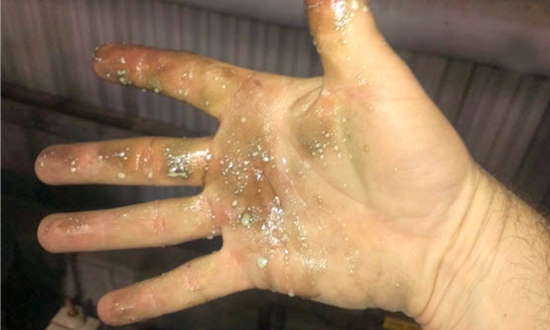
This mess came from a compressed air valve adjacent to a location that made direct contact with food. There were no filters between the compressed air valve and the food. The engineering manager said the facility used food-grade oil in the air compressor.
This article explores why testing compressed air quality is as essential as choosing the right filtration, discusses real-world experiences, illustrates the risks of assuming things are right and explains the value of compressed air measurement.
The ISO 8573-1 Standard Explained
To understand whether or not a compressed air system is delivering clean air, we need to start with a clear definition of what "clean" means. That’s where ISO 8573-1 comes in. This widely-known international standard outlines purity classes for compressed air based on three types of contaminants: solid particles, water (humidity or liquid) and oil (aerosol, vapor and liquid).
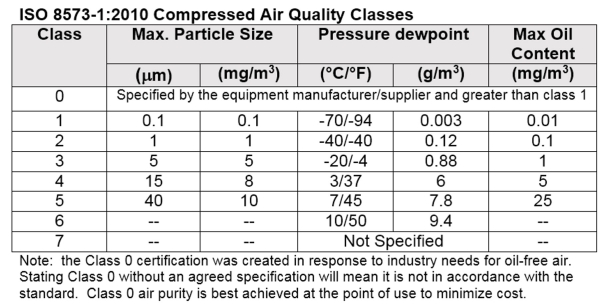
ISO 8573-1 levels (Source: Compressed Air Challenge).
Each category is rated on a numerical scale. The lower the number, the cleaner the air. For example, Class 1 for oil means the air contains no more than 0.01 mg/m³ of total oil content, while Class 4 allows up to 5 mg/m³. A designation of ISO 8573-1 Class 4.4.4 means the air must meet Class 4 limits for particles, moisture and oil, a level commonly used for applications where compressed air only comes into incidental contact with packaging or non-critical product surfaces.
Industries such as food and beverage, pharmaceuticals, cosmetics and electronics often demand higher purity levels because compressed air can directly impact product safety and quality. However, even in less regulated sectors, maintaining clean compressed air helps reduce maintenance costs, prevent downtime and prolong the life of pneumatic equipment.
It’s important to note that ISO 8573-1 doesn’t dictate how to achieve these levels. It simply defines the targets. The responsibility falls upon each facility to select appropriate air compressors, compressed air dryers, compressed air filters, and compressed air testing protocols to meet and maintain the required class. This flexibility is beneficial, but it also introduces risk: If a facility relies solely on equipment specifications without validating actual performance, the compressed air system might fall far short of the intended quality.
While ISO 8573-1 is the global benchmark for assessing compressed air quality, defining limits for particles, water and oil, it’s important to recognize it does not cover microbial contamination. For manufacturers in industries where compressed air may come into direct or indirect contact with sterile or ingestible products, this is a significant gap.
Bacteria, mold spores and other microorganisms are not measured or regulated under ISO 8573, which means a compressed air system can be fully compliant with Class 1.1.1 purity and still be a risk for microbial contamination. This is especially concerning in applications involving packaging, filling or cleaning where compressed air is used in a high-contact environment.
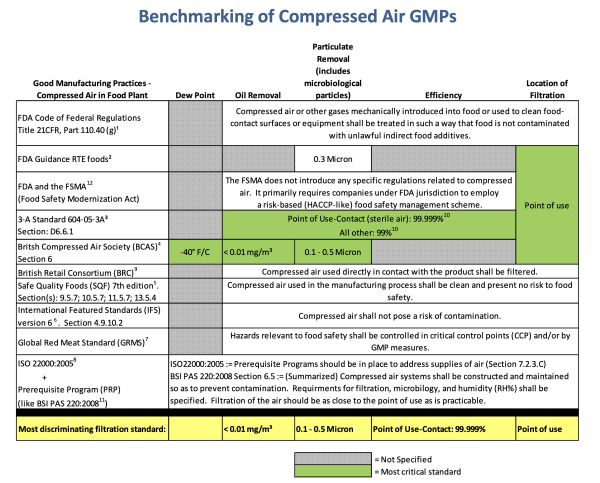
Various other standards cover microbial content, often varying by locality. (Source: “Compressed Air GMPs for GFSI Food Safety Compliance,” Compressed Air Best Practices® Magazine, January 2016). Click to enlarge.
To mitigate this risk, these facilities must take additional steps beyond ISO standards, including:
- Sterile-grade filtration: Install bacterial-retentive filters, typically membrane or high-efficiency pleated filters with 0.01 micron or better retention at the point of use. These filters are verified to remove bacteria and other microorganisms from the air stream.
- Frequent sterilization or filter replacement: In critical applications, filters may need to be steam-sterilized or replaced on a fixed schedule, especially in cleanrooms or aseptic zones.
- Routine microbial monitoring: Compressed air systems in hygienic environments should undergo periodic microbial testing using specialized air samplers or contact plates at the point of use to ensure no live organisms are present.
- System design and materials: Smooth, corrosion-resistant piping materials like stainless steel or aluminum, along with drainage-friendly layouts, help prevent moisture pooling and microbial growth inside distribution systems.
- Moisture control: Because bacteria thrive in wet environments, ensuring extremely low dew points, often -40°F (-40°C) or lower, is essential to inhibiting microbial proliferation.
Testing Is Essential for Maintaining Compressed Air Quality
In compressed air systems, perception often doesn’t match reality. Many plant personnel assume that by installing the right filters, often based on supplier recommendations or catalog specs, they’re automatically producing compressed air that meets ISO 8573-1 requirements. But without air quality testing, there's no way to confirm whether or not the system delivers the required purity.
Compressed air systems are dynamic. Filters degrade over time, compressed air dryers can malfunction and compressed air piping, especially in older compressed air systems, may contain years of built-up contamination. Even a perfectly designed compressed air system can experience fluctuating performance due to changes in operating conditions, unexpected oil carryover or poor maintenance practices. These issues often remain hidden until product quality problems arise, or a third-party audit uncovers the gap.
Testing provides critical visibility. With the use of portable compressed air analyzers, plant operators can measure oil content, particulate levels and dew point at various locations in the compressed air system to determine whether or not air quality is consistent and within specifications. This should be a routine part of compressed air system maintenance, particularly in industries with product contact or regulatory requirements.
Without compressed air system testing, even the most expensive filtration systems may fall short. In many real-world cases, they do.
Case Study: Cosmetics Manufacturer Fails the Test
A mid-sized cosmetics manufacturer supplying products to a large multi-national company was confident its compressed air system was up to par. After all, it had compressed air filtration installed and never encountered issues serious enough to raise alarms. But then, a client required verification that its compressed air met ISO 8573-1 Class 4.4.4.
When compressed air quality measurements were first taken, they were far worse than expected. The compressed air system wasn’t just failing to meet Class 4.4.4; it didn’t even qualify for the lowest standard, Class 5.5.5. Oil content, particulate matter and moisture levels were all significantly above acceptable thresholds. This was obvious from visual inspections.
“I didn't expect the initial readings to skyrocket,” said Francisco Lara, Manager, Airtec Global, the service provider. “All the particulates were up to the highest values. Hydrocarbons were off the charts. The required maximum value was 5.0 mg/m³, but the instrument measured above this two seconds after connecting it. It was so bad, I had to disconnect the meter to avoid damage.”
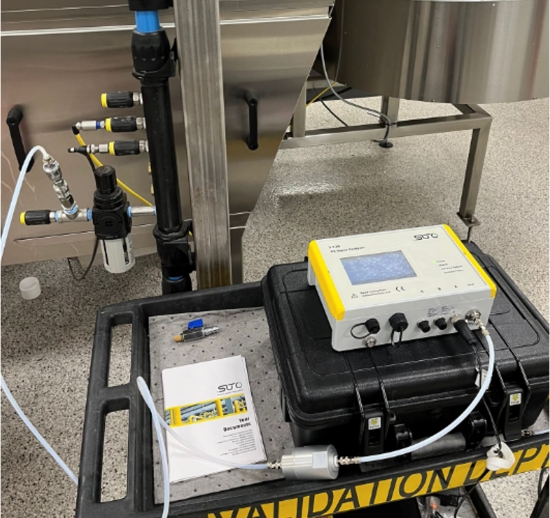
A measurement device ensured the compressed system met ISO 8573-1 Class 4.4.4. (Source: SUTO iTEC).
It turned out the plant relied on lubricated air compressors and had only basic filtration in place. This is acceptable for general applications, but is nowhere near sufficient when compressed air makes direct contact with bottles used in product packaging.
The first step was upgrading the compressed air supply-side filtration. Technicians installed a more robust filtration system that included coalescing filters, activated carbon filters and fine particulate filters, all sized correctly. While this significantly reduced some contaminants, follow-up measurements revealed that oil vapor levels remained too high to meet Class 4.4.4 standards.
This led to the discovery of a deeper problem: oil saturation in the plant’s compressed air piping. Over more than a decade of operation, airborne oil from the lubricated air compressors had accumulated along the inner surfaces of the pipes. Now, even with clean compressed air entering the system, residual contamination was bleeding back into the airflow.
Full compressed air piping replacement wasn’t feasible due to budget constraints. However, only three of the plant’s seven production lines were used to supply the client. This allowed the team to focus their efforts where they mattered most.
High-efficiency point-of-use filtration consisting of coalescing, activated carbon and particulate elements was installed on each of the three critical compressed air lines. After this localized treatment was implemented, another round of compressed air testing showed excellent results. The air quality not only met, but exceeded the Class 4.4.4 requirement.
“There is definitely a need for this newly developed type of testing instrument. I know of companies that could have saved millions of dollars, literally, in environmental fines, if only they had a monitoring solution for their compressed air quality.” Lara said.
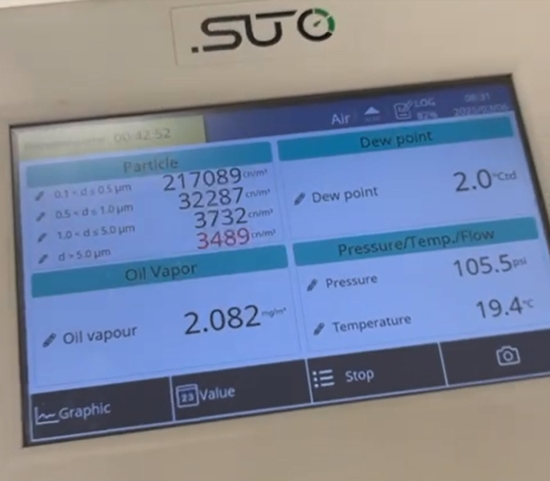
The final reading showing compliance with ISO 8573-1 Class 4.4.4. (Source: SUTO iTEC).
Case Study: Milk Products Plant Has Reliability Issues
A milk products production facility aiming to meet corporate Class 0 compressed air standards had unexpected water and oil contamination impact its operations.
Despite having a large oil-free air compressor and desiccant compressed air dryer on-site, moisture was found in the compressed air piping, and air quality issues began to interfere with production reliability.
A closer inspection revealed that while the oil-free air compressor was intended to serve as the sole source of compressed air, system demand frequently exceeded capacity. As a result, an older lubricated air compressor was routinely brought online, unintentionally introducing the risk of oil aerosol into the compressed air system.
Meanwhile, the desiccant compressed air dryer, although technically capable, was operating inefficiently. Improper check valve configuration and a fixed purge cycle meant that its drying performance was inconsistent, especially during light loads. The main air compressor was also forced into rapid cycling, reducing stability and increasing the chance for contaminants to slip through.
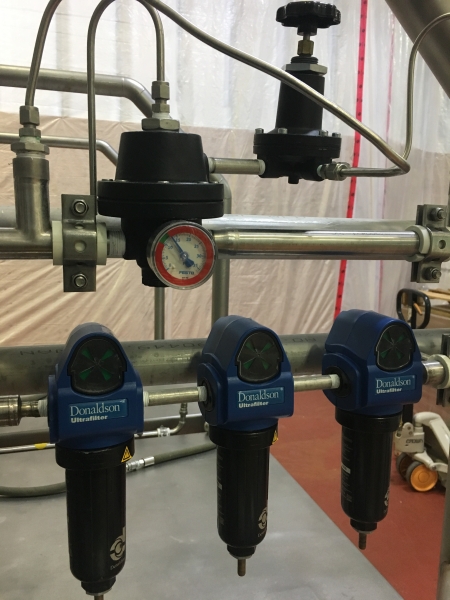
Secondary filters were required due to contamination from lubricated air compressors.
To make matters worse, a failed condensate drain on the lubricated air compressor’s receiver allowed water to collect and intermittently flow into the compressed air system. Attempts to compensate with a cracked manual drain elsewhere failed to prevent free water from entering the compressed air distribution network.
Despite good intentions and investments in high-quality equipment, a combination of system integration issues and aging infrastructure undermined the plant’s compressed air quality goals. This case study highlights the importance of aligning system design, component coordination and air quality testing, especially when producing food-grade products.
Article suggestion: Milk Products Plant Finds 52 Percent Potential Savings from Compressed Air Best Practices® Magazine.
Follow-Up Monitoring and Maintenance Planning
To ensure their solutions weren’t short-term fixes, each customer was advised to schedule a six-month follow-up audit. This helped determine whether or not serious problems remained, and helped technicians plan the optimal maintenance and replacement schedule for ongoing ISO 8573-1 compliance.
Testing and monitoring were conducted using portable compressed air analyzers, allowing the service provider to present clear, data-backed evidence of system performance before and after the intervention.
These case studies illustrate a lesson that applies broadly across manufacturing: Compressed air quality cannot be assumed; it must be verified. Even when the right equipment is in place, unseen factors, including residual contamination or inadequate maintenance, can undermine compressed air system performance and product integrity.
Remember:
- Filtration is not a guarantee. Installing standard compressed air filters without understanding compressed air system history or usage conditions can lead to a false sense of security. Compressed air system filtration must be matched to both the application and contaminants present.
- Compressed air system piping history matters. As shown here, the long-term use of lubricated air compressors can lead to internal buildup in compressed air piping that continues to release oil into the air stream. Upgrading filters at the air compressor won’t solve the problem if the compressed air piping is saturated with contamination.
- Point-of-use filtration can be a smart workaround. When system-wide remediation is not financially viable, localized treatment at critical production lines can deliver the required compressed air quality. This is a focused, cost-effective way to protect product integrity where it matters most.
- Routine testing is essential. Portable analyzers provide real-time visibility into compressed air quality. By regularly testing at various points, facilities can confirm compliance, detect emerging issues early and plan compressed air filter maintenance based on actual saturation rates rather than guesswork.
- Compliance is an ongoing process. Meeting ISO 8573-1 standards isn't a one-time achievement. It requires continuous monitoring, testing and adjustment. Compressed air quality can drift over time, especially when filters degrade or operations change.
Conclusion: Achieving Desired Levels Requires Diligence
In manufacturing environments where compressed air comes into contact with products, packaging or sensitive equipment, compressed air quality is not optional; it’s essential. Standards like ISO 8573-1 exist to help protect product integrity, consumer safety and brand reputation. Achieving the desired standard requires more than simply installing compressed air filters and trusting they’ll work.
As these case studies show, assumptions can lead to costly oversights. Hidden contamination, inadequate compressed air system design and lack of testing can all result in non-compliance, even when compressed air systems appear to be properly configured. The only way to ensure compressed air purity is through regular, strategic testing backed by data and expertise.
Manufacturers should treat compressed air as a critical control point, one that deserves the same level of oversight and verification as any other process affecting product quality. Whether through full-system audits or targeted point-of-use solutions, a well-documented testing program provides confidence, protects customers and safeguards supplier relationships.
In the end, clean compressed air isn’t just a best practice, it’s a business imperative.
About the Author
Ron Marshall is a seasoned compressed air expert and Chief Auditor at Marshall Compressed Air Consulting. With extensive experience conducting compressed air system assessments, he specializes in optimizing air compressor efficiency and reducing energy consumption. He is a Certified Engineering Technologist (C.E.T.), Certified Industrial Manager (C.I.M.) and Certified Compressed Air System Specialist.
About Marshall Compressed Air Consulting
Marshall Compressed Air Consulting is an independent firm specializing in industrial compressed air system assessments, energy efficiency optimization and training.
To read articles on ISO Standards, visit https://www.airbestpractices.com/standards/iso-cagi.
For expert presentations, visit our Webinar Archive Section dedicated to ISO Standards at https://www.airbestpractices.com/webinars.