
After an energy audit is performed, how much value has been created? The answer is zero. Value has been identified but not created until the recommended energy conservation measures have been completed. Execution requires funding. What do you do to get funding?
Before you answer the funding question as an energy manager, you need to understand your company’s priorities. For many companies, priorities include safety, conserving energy, cost savings, reliability and emissions reductions.
Reducing industrial greenhouse gas emissions drives multiple conversations these days. Some industrial customers require manufacturers to disclose emissions via companies such as CDP. Based on a 2022 study in the Journal of Cleaner Production, “Bottom-up estimates of deep decarbonization of U.S. manufacturing in 2050,” the most cost-effective and single largest contributor to industrial carbon emissions reductions is energy efficiency.
To determine how to enhance energy efficiency, many people have performed system audits on air compressors, vacuums, chillers and cooling systems, but an audit only identifies possibilities. Nothing has been accomplished by an audit alone. After the audit, funds must be approved and spent to capture those opportunities. Therefore, it is important to understand the funding process to capture the identified savings. I would like to spend a few minutes discussing funding approval.
As an energy or facilities manager, after the audit, your goal is to get the necessary funding and resources to execute your project. One of the best ways to do that is to understand what is required to get people to act. Ludwig von Mises, an Austrian economist, developed the Human Action Model. Based on this model, there are three requirements to get someone to act. They must be uncomfortable with the current situation, see a way to address that discomfort and believe their action will address that discomfort.
Maintenance Cost vs. Maintenance Investment
The easiest way to make a business leader uncomfortable is to show them how the current situation hurts financial performance. Be sure to point out both the benefits and the cost of energy conservation measures in financial terms. I also recommend the cost of inaction be included. If a project’s approval has been delayed, point out the lost opportunity. For example, if a compressed air leak audit identified savings of \$10,000 per month and approval has been in process for six months, highlight the \$60,000 of lost savings.
At one point in my career, I was a maintenance manager at a paper mill. Maintenance managers continuously prioritize various required repairs. If a choice must be made to either repair a pump or eliminate compressed air leaks, the thought process goes something like this: “We can run with a compressed air leak, but not without a pump.” As a result, the mill had a significant compressed air leak problem. We had meters showing compressed air flow to major areas. Many of the compressed air leaks could not be repaired while the plant was operating. I unilaterally decided to invest some overtime in compressed air leak repairs over the Thanksgiving holiday. We repaired nearly all the leaks, noted the reduction in the flow trended on the system and calculated the savings. After the holiday, the plant manager called me into his office to question the overtime. When I showed him what we spent versus what we saved, he thanked me for making a good investment but chastised me for flying solo instead of getting permission first.
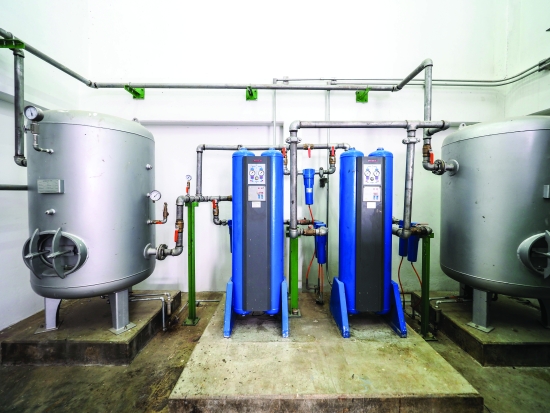
Demonstrate how putting off repairs – such as fixing compressed air leaks – hurts financial performance.
Capturing the benefits of an audit requires maintenance, facilities and energy leaders to understand the way funding decisions are made at their companies. There are two basic types of funding mechanisms: expense and capital. Expense spending directly results in an income tax reduction by offsetting some gross profit. Capital spending also results in an income tax reduction, but not for the full amount of the expenditure in the current year. Capital expenditures are typically depreciated over multiple years, reducing income tax liabilities over those years. Therefore, operations managers prefer to spend capital funds and financial analysts prefer to spend expense funds.
Capital is always evaluated as an investment with the discipline to perform financial calculations, but expense is typically evaluated solely as an expenditure without any consideration of potential financial benefits. Companies should seek a financial return on both their capital and expense portfolios.
As mentioned, depending on their role in the company different leaders may have different preferences for capital and expense spending. The chief financial officer is likely to prefer expense spending to get the same year’s income tax benefits, while the plant manager is likely to prefer capital expense because it doesn’t have an impact on the operating budget. Your goal is understanding the rules for capital and expense investments well enough to defend the investment to both groups.
Understanding Fixed and Variable Expenses
Most people understand expense spending: Something breaks and money is spent to get it repaired, or energy is delivered to the plant and the bill is paid at the end of the month. Repairs are considered fixed expenses.
Energy is a variable expense. Fixed expenses are typically evaluated by simply comparing the current year’s spending to the prior year’s on the budget. Spending less money repairing plant assets typically implies good performance. Spending more drives scrutiny. Energy as a variable expense requires more in-depth evaluation to determine year-over-year performance. Several drivers impact energy spending including pricing, production volume and weather, as well as changes in overall energy efficiency.
The difficulty evaluating the variable expense for energy makes it difficult to evaluate the profitability of fixed expense investments. For example, the expense impact of replacing missing piping insulation is easy to see, but the energy cost savings are difficult to measure and verify. This separation between spending and savings makes expense investments with energy returns difficult to justify.
Over the years, I have seen several instances where a manager cut insulation repairs out of the maintenance budget to save money without realizing energy costs went up more than the savings. This resulted in the company spending more, not less, money. For example, in a plant that operates year-round, insulating 100 feet of uninsulated 3-inch compressed air piping will save \$3,000 worth of energy. Depending on the complexity of the compressed air piping, the line could cost \$4,000. Nearly all businesses will approve an investment with a simple payback of 16 months.
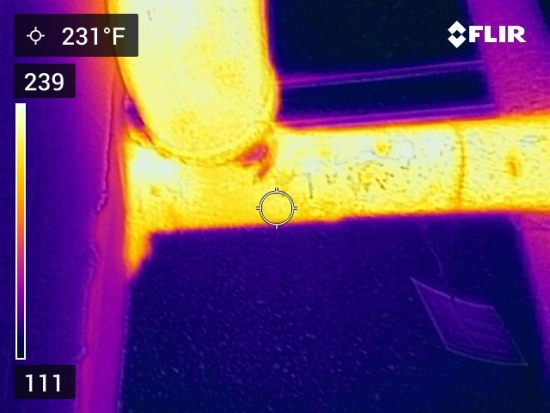
Neglecting insulation repairs, such as on this uninsulated steam line, can cost more than it saves.
You will need to do enough analysis to quantify the impacts of production volume, energy pricing and weather to justify the potential benefit. As stated, energy managers should define the return on their expense investments, then investments in energy saving opportunities such as insulation will be more likely to be approved.
Gaining Funding Approval
Once it has been determined an energy conservation measure requires expense spending, the next task is getting funding approved to capture the savings. The plant manager typically has a delegation of authority to authorize expenditures up to a certain amount. When expense spending is below the local delegation of authority, the approval process is less time-consuming. However, that does not mean money should be spent without consideration of the quality of the investment. For example, if I had requested the funds to repair compressed air leaks in the paper mill and (following an audit) provided both the cost of the repair and the projected electrical power savings or the improved reliability of the compressed air system due to reducing the compressed air flow, the funds would have been approved and I would not had had to meet with the plant manager after the fact.
One word of caution: Don’t break up larger repairs into smaller pieces for the sole purpose of staying below the authorization limit. If repairs are going to be broken up into smaller pieces of work, it should be for a valid business reason, such as charging repairs by area to reflect the cost in the appropriate cost center or spreading work over a longer period to align with available resources. Breaking larger repairs into smaller pieces for the sole purpose of circumventing a company’s funding approval processes is unethical and erodes the trust required when spending company funds.
If the energy conservation measure, such as installing a variable frequency drive on a cooling tower pump, requires the purchase of a new or a significantly upgraded piece of equipment, then the investment is most likely going to require capital approval. Local plant management may have authorization for some level of capital spending, but larger capital projects typically require approval from corporate officers and go through a more rigorous and time-consuming approval process. This delegation of authority to approve capital projects grows with increasing levels of responsibility. Depending on the size of the projects, the approvers and their concerns will vary.
While expense and capital spending may go through slightly different processes, the basic tenants of approval remain the same. Your goal is understanding who the approver is, where do their interests intersect with yours and how the business will benefit from the investment.
First, determine whether the energy conservation measure is capital or expense. Then, based on a thorough understanding of the approval process, tailor the project justification to the approver’s interests, and express the benefits in financial terms. Do not try to justify your project based on natural gas MMBtu savings. Justify your investment in financial terms.
If, for example, waste heat from an air compressor were used to preheat boiler feedwater based on a reduction in natural gas consumption and presented to a financial manager as reduction of 10,000 MMBtus, approval is less likely than if it were presented as \$40,000 annual savings.
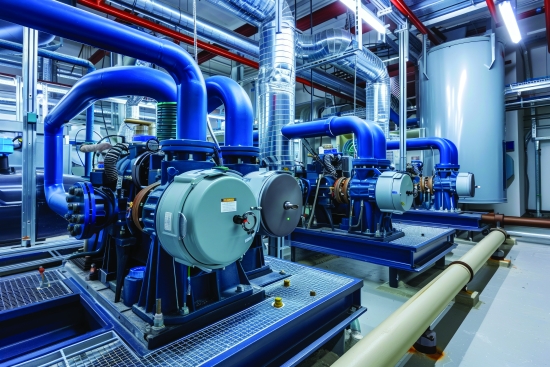
Understand your audience. You might have better luck getting approval for a heat recovery project by demonstrating money saved, not energy saved.
Align with Company Goals
To deliver a convincing justification, I recommend that you understand the strategic goals of the company.
If reliability drives future profits, emphasize how your project could impact reliability. For example, a recent compressed air audit at a plant revealed that every single air compressor was operating at maximum. Compressed air system pressure fluctuated based on flow. Pressure variations like that can easily lead to inconsistent pneumatic valve operation and process reliability issues. Study the downtime associated with pressure fluctuations and lead with that benefit when presenting the project. Incorporate the financial benefits of energy use reductions in the justification, but lead with what they care about.
If process stability causes production or product quality issues, leverage the process stability aspects of the energy conservation measure to drive approval. Bath tissue converting operations require a temperature and humidity-controlled environment to allow the paper to predictably move through the tissue winder at high speeds. A chiller upgrade allowing the converting equipment to operate at full speed is more likely to be approved than one only reducing electrical power consumption.
Once you have a good idea of how to align the benefits of the energy conservation measure with the strategic goals of the company and the financial benefits, you are much closer to getting approval. Many companies have an easier time approving the investment of funds than they have locating the internal resources to execute the project. Company engineering staff are frequently stretched to their limits and reluctant to hire contractors who require a significant on-boarding process before they provide supplemental capability. If you know your company’s engineers are stretched thin, work to lessen the number of engineering hours to execute your project. Use turn-key vendors to do the bulk of the work, such as having an air compressor distributor design and install the compressed air system.
It's the work done after the audit that makes the difference between a binder on a shelf gathering dust and an executed energy conservation measure creating value. Your management wants results, not reports.
About the Author
Michael Younis has 34 years of energy management experience in breweries, fertilizer plants, pulp and paper mills, refineries, flat glass plants and chemical plants. He currently supports the ENERGY STAR®’s refinery and asphalt focus groups.

About Dove Energy Services
Dove Energy Services provides energy management program support to companies developing an internal energy management capability based on ENERGY STAR’s energy management process. For more information, visit https://www.linkedin.com/in/michael-younis-293a623.
To read more Compressed Air System Assessment articles, visit https://www.airbestpractices.com/system-assessments.
Visit our Webinar Archives to listen to expert presentations on Compressed Air System Assessments at https://www.airbestpractices.com/webinars.