Industrial Utility Efficiency

Technology

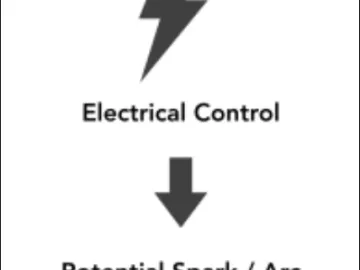
Learn how engineers can safely remove moisture from compressed air systems in hazardous environments by eliminating ignition risks through pneumatic controls. This article explores design considerations, performance characteristics and reliability factors for regenerative desiccant dryers operating in Class I, Division 1 locations.

Air Compressor Sizing for High Ambient Temperatures

Room temperature, or ambient temperature, has a significant effect on plant operation. The amount of space, or lack thereof, for compressed air equipment and the cooling flow all have an important impact on plant operation; because if the air compressors are down; so are you!

Solving Predictive Maintenance and Sustainability Challenges Through Digital Transformation

The industrial internet of things (IIoT) and industry 4.0 have digitally transformed the way facilities operate, enabling processes that are smarter and more efficient than ever before. But digital transformation is still new to some and may seem abstract or ambiguous. In actuality, it’s quite the opposite.

Exploring the Total Cost of Ownership of Oil-Injected vs. Oil-Free Compressed Air Systems

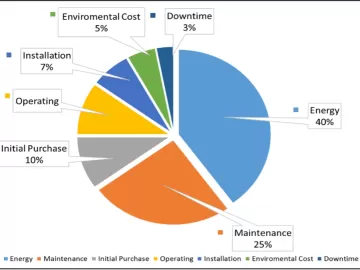
The purity of the compressed air that contacts finished goods and their packaging is scrutinized more than ever before. As a result, oil-free air compressors comprise a larger segment of the compressed air market than ever before. In fact, Grand View Research, Inc. projects a CAGR of 4.8% for the oil-free market as compared to a CAGR of 3.8% for the market as a whole (2019-2025).

Preparing Reciprocating Air Compressors for Winter

Freezing temperatures can have negative effects on your reciprocating air compressor, dryer, and many accessories. One of the best practices to adopt is keeping a detailed maintenance log. At the end of each season, take note of the condition your equipment is in, and address it promptly using the manufacturer’s instructions to keep it operating smoothly and efficiently.

Promote Sustainability with an Optimal Air Compressor Lubricant

When facilities look to improving sustainability, they tend to focus first on traditional energy utilities – natural gas, heating oil, electricity and water. As facilities achieve greater sustainability through efficiencies that reduce utility energy waste and minimize the plant’s carbon footprint, they begin to focus on other energy sources, including compressed air, to enhance sustainability efforts.

The Gentex Journey to Reliable Energy Conservation - 3 Levels of Compressed Air Systems

The information contained in this article, will help the operator to assess his/her systems, and identify where these systems fall within a three-level category. There are many ways, and opportunities to make a compressed air system produce reliable and good quality air. The three levels discussed here could also be characterized as a “continuous improvement plan” which can be achieved over the course of time, and with the occasional investment of money.

HAUG Oxygen Compressors for Efficient Gold Extraction

Logistics and supply problems are widespread on the African continent. Lack of infrastructure as well as capacity and efficiency deficiencies can affect supply chains and make them more expensive. Gold mines, which are often located in secluded areas, therefore seek to provide their entire infrastructure themselves. Even the oxygen required for efficient gold extraction by cyanide leaching is therefore not delivered but generated on site.

Remote Monitoring Takes Off for Aerospace Manufacturer

In the absence of the control system, the air compressors were loading and unloading according to pre-set pressure bands, which forced the system to operate at higher pressures and run inefficient combinations of compressors in order to effectively match air demand. When switched on, irrespective of air demand, the control system was able to control all compressors on a single, tight pressure band and efficiently match output with demand.

Compressed Air Dryer Key Performance Indicators

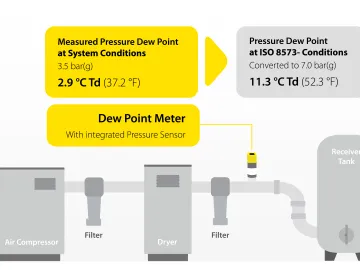
The purpose of this article is to point out the key performance indicators (KPI’s) that can assist in maintaining the performance and troubleshooting of compressed air dryers. The most important KPI to monitor is the pressure dew point (PDP) of the compressed air exiting the dryer(s). The PDP of the compressed air should be monitored at the discharge of each dryer and downstream of where the compressed air from multiple dryers converges. 

Sullivan-Palatek’s Passion Drives Continued Success

Sullivan-Palatek’s products include electric air compressors from a five horsepower (hp) unit that delivers 22 scfm at 125 psi up to a 450-hp machine rated to provide 1,770 scfm at 125 psi. It also manufactures Variable Frequency Drive (VFD) air compressors from 15 to 450 hp, which can deliver anywhere from 43 to 1,910 scfm at pressures ranging from 100 and 125 psi.

Air Compressors

From October 29-31, 2024, professionals who operate, maintain and design industrial compressed air,

Air Treatment/N2

A modular nitrogen generation system integrated with compressed air infrastructure enabled on-site

Blowers

The plant upgrades, in combination with a progressive management strategy, allows the plant to

Compressor Controls

Hitachi Astemo’s efficiency gains will turn into significant cost savings. In this article we

Instrumentation

The ISO 8573-1 standard defines clear limits for various compressed air quality parameters. This

Pneumatics

The U.S. Department of Energy’s 2002 Motor Market Assessment established that pumping systems offer

Vacuum

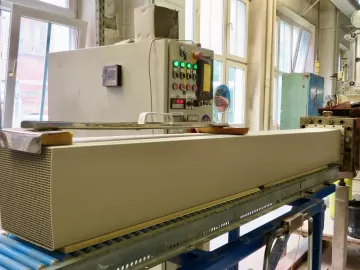
Industrial ceramics have been produced in Hermsdorf, near Jena, since 1890. In the past, high

Cooling Systems

The AIM (American Innovation and Manufacturing) Act was finalized by the US government at the end of