Industrial Utility Efficiency

Bulk

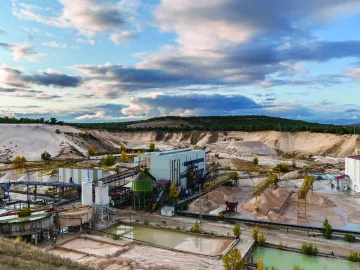
Compressed air system reliability relies on engineering expertise, environmental management and proactive maintenance. This article highlights how Brandon & Clark improved performance in two demanding applications: reducing failures in a dust-heavy silica mining operation through frequent preventive maintenance, and executing a complex disassembly and reassembly of a 300 hp air compressor in a confined university facility while preserving the OEM warranty. These cases show how tailored solutions and long-term service strategies enhance system reliability.
Dealing with High-Volume Intermittent Demands

In many industrial plants there are one or more applications with intermittent demands of relatively high volume. One example is the use of dense phase transport systems to convey the cement. Dense phase systems can cause severe dynamic pressure fluctuations affecting quality of the end product in a plant.

Material Conveying with Pneumatic and Vacuum Systems

In many manufacturing operations, a very significant compressed air use is pneumatic conveying of many types of materials such as cement, fly ash, starch, sugar, salt, sand, plastic pellets, oats, feeds, etc. Often these are systems that use high-pressure air (100 psig class) reduced to lower pressures (15 psig, 45 psig). This creates an air savings opportunity.

Air Storage Receiver Helps Dense-Phase System

Sitting on his desk the day Brian began his new job as Plant Engineer for Carbo Ceramics’ McIntyre, GA facility was a proposal to purchase a new 150 HP air compressor as a backup machine. The facility already had six of these machines and, yes, all six ran almost continuously.

A Food Processing System Assessment

This facility processes bulk food ingredients into finished packaged food products. The factory belongs to a division of a large corporation and was spending \$732,342 annually on energy to operate their compressed air system. This system assessment detailed twelve (12) project areas where yearly energy savings totaling \$214,907 could be found with a minimal investment of \$68,350. Due to space constraints, this article will detail only the higher impact project areas. The over-all strategy for improving this air system centers on improving specific power performance of the #3 centrifugal air compressor and reducing over-all demand with compressed air savings projects.