Industrial Utility Efficiency

Instrumentation

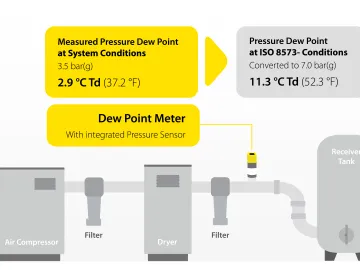
The ISO 8573-1 standard defines clear limits for various compressed air quality parameters. This helps users classify their systems consistently, compare results across applications and set the right requirements for specific processes. This article explains the key points of the ISO 8573 standard and guides you through the correct way to measure and classify pressure dew point for compliance.

Green Printer Reduces Energy Costs by 50%

The primary objective of this case study is to illustrate the process in which industrial facilities can qualify for energy incentives on projects that reduce the energy usage of their compressed air system.

Sustainability at Millipore

Compressed Air Best Practices interviewed Paul Lukitsch.  Mr. Lukitsch is the Regional Facilities & Energy Manager for Millipore Corporation.

Seven Sustainability Projects: Metering

Reducing energy costs and pollution emissions involves many areas within an industrial facility.  My studies have found seven (7) key (or common) areas where low cost practical projects can be implemented.  Combined, these projects provide savings exceeding 10% of the annual energy spend with an average payback of less than one year.

Instrument Air in Nuclear Power Plants

Nuclear power plants produce electricity for people, business and industry.  Electricity is produced in a similar fashion as fossil fuel (i.e., coal, oil, etc.) power plants, using steam to drive a turbines which spin an electrical generator, producing the electricity. 

Air Compressor Monitoring

With all of the different LEED credits and associated M&V requirements and tax incentive opportunities for businesses to reduce energy consumption, we have seen an increasing demand for metering. Companies are looking for more ways to estimate cost savings and prove that their energy saving investments are working.

Class Zero Air Measures Race Car Performance

A four thousand, five hundred and fifty pound (4550 lbs.) race car is running at 170 mph and facing wind resistance of 150 mph. The car then enters a curve creating a three-degree “yaw” (the change in angle from the direction the car is headed and the airstream).  The car struggles to maintain speed as the yaw changes and the dynamic downforce load on the car changes.  Suddenly, the driver-less car comes to a stop on the stainless-steel track...