Industrial Utility Efficiency

Technology

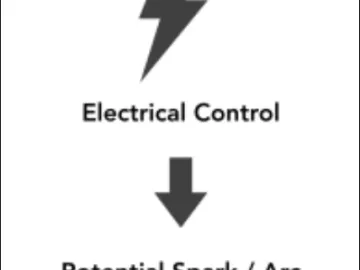
Learn how engineers can safely remove moisture from compressed air systems in hazardous environments by eliminating ignition risks through pneumatic controls. This article explores design considerations, performance characteristics and reliability factors for regenerative desiccant dryers operating in Class I, Division 1 locations.

ISO 8573.1 – Contaminants and Purity Classes

Industry standards serve a very important purpose for the end users of compressed air equipment.  If the standards are well written, they can help to promote the equipment that they govern, as long as the equipment manufacturers properly apply and promote the standards.

Wire Size Recommendations for VFD Compressors

Safety is the driving force in the determination of minimum recommended supply wire sizes for variable speed compressor packages.  With this in mind, all wire size recommendations should be based on meeting, or exceeding, the minimum requirements of the National Electrical Code (NEC).

Air Compressor Monitoring

With all of the different LEED credits and associated M&V requirements and tax incentive opportunities for businesses to reduce energy consumption, we have seen an increasing demand for metering. Companies are looking for more ways to estimate cost savings and prove that their energy saving investments are working.

A Steel Processing Audit

This steel processing facility has been operating for over one hundred years.  This facility is part of a large corporation with numerous plants around the world.  This audit focused on the compressed air system on one side of the Works which we will call the “North Plant”.

Blowers Save Energy at Aluminum Mill

Relatively few people realize that for a variety of industrial manufacturing applications, from air knife drying to simple blow-off nozzles, the use of high pressure compressed air that bleeds into the atmosphere represents a significant waste of energy.  

3 Key Factors for Designing Vacuum Pump Inlet Filtration Systems

Nearly all vacuum pumping technologies have some degree of sensitivity to inlet particulate contamination.  Since everything from a vacuum assisted production process ends up at the inlet of the vacuum pump, it is important to figure out how to best protect the pump in that particular environment.  In many cases, the expected service life of a vacuum pump comes down to how well it is protected from incoming contamination.

Class Zero Air Measures Race Car Performance

A four thousand, five hundred and fifty pound (4550 lbs.) race car is running at 170 mph and facing wind resistance of 150 mph. The car then enters a curve creating a three-degree “yaw” (the change in angle from the direction the car is headed and the airstream).  The car struggles to maintain speed as the yaw changes and the dynamic downforce load on the car changes.  Suddenly, the driver-less car comes to a stop on the stainless-steel track...

Air Compressors

From October 29-31, 2024, professionals who operate, maintain and design industrial compressed air,

Air Treatment/N2

A modular nitrogen generation system integrated with compressed air infrastructure enabled on-site

Blowers

The plant upgrades, in combination with a progressive management strategy, allows the plant to

Compressor Controls

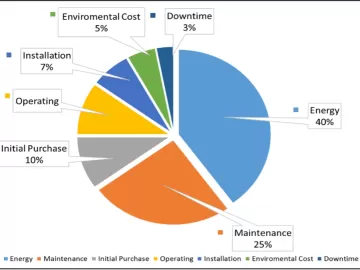
Hitachi Astemo’s efficiency gains will turn into significant cost savings. In this article we

Instrumentation

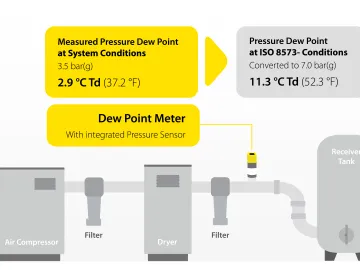
The ISO 8573-1 standard defines clear limits for various compressed air quality parameters. This

Pneumatics

The U.S. Department of Energy’s 2002 Motor Market Assessment established that pumping systems offer

Vacuum

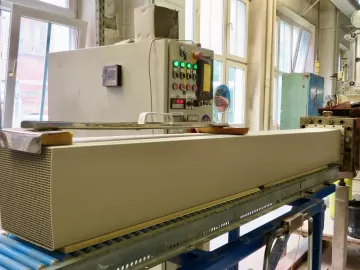
Industrial ceramics have been produced in Hermsdorf, near Jena, since 1890. In the past, high

Cooling Systems

The AIM (American Innovation and Manufacturing) Act was finalized by the US government at the end of