Industrial Utility Efficiency

Metals

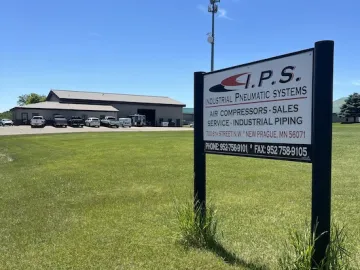
IPS supplies compressed air to a lot of machinery running outdoors, such as dust collectors and feed mills on grain elevators, as well as to other equipment in environments lower than 32°F (0°C). Temperatures that low require desiccant dryers. Hoffman helps his customers sort out their options and determine which type of desiccant dryer – heatless, heated purge, heated blower purge – is ideal for their needs.
Chillers Save on Energy and Water Consumption

Industrial plants are major consumers of water. Water is used in many processes. Sustainability projects focus on reducing the consumption of water and the energy-costs associated with cooling water so it may be effectively used.

Aluminum Mill Reconfigures Compressed Air System

This aluminum mill spends \$369,000 annually in energy costs to operate their compressed air system. This system assessment recommends actions reducing annual energy costs by \$120,000 and improving productivity and quality by delivering clean, dry compressed air.

Energy Management at Saint-Gobain

Congratulations on Saint-Gobain being named a 2010 ENERGY STAR Partner of the Year by the U.S. Environmental Protection Agency. This is the second year in a row you’ve won the award. Why was this award received?

Savings at the Steel Mill

This major mill complex upgraded their compressed air system and thereby eliminated \$500,000 in annual rental compressor costs, reduced annual cooling-water costs by \$500,000, and reduced electrical energy costs by \$135,000 per year.

Distribution Piping: Understanding Pressure Drop

The Compressed Air Challenge® (CAC) is a voluntary collaboration of industrial users; manufacturers, distributors and their associations; consultants; state research and development agencies; energy efficiency organizations; and utilities. This group has one purpose in mind - helping you enjoy the benefits of improved performance of your compressed air system. The mission of the Compressed Air Challenge (CAC) is to provide resources that educate industrial users about optimizing their compressed air systems.

Why Do Steam Traps Fail?

Properly functioning steam traps open to release condensate and automatically close when steam is present.  Failed traps waste fuel, reduce efficiency, increase production costs and compromise the overall integrity of the steam and condensate systems.  Traps should be tested on a regular basis -- or the neglect may be quite costly.    

Assessment Improves Electroplater Production

Faced with rising energy costs, a large electroplating company sought to improve the efficiency and reliability of its compressed air system. After getting a quote from their vendor on a new 300-hp compressor to replace an existing unit, the company sought a comparison quote due to the significant investment the new compressor represented. Based on a recommendation from one of their customers, they turned to Scales Industrial Technologies.

Tubular Membranes Handle Oily Wastewater at Metaldyne

Finding the most effective, reliable and economical method for separating and concentrating die lubricant is no easy task for die casting plants – and the situation at the Metaldyne aluminum die casting plant in Twinsburg, Ohio was no different. 

A Steel Processing Audit

This steel processing facility has been operating for over one hundred years.  This facility is part of a large corporation with numerous plants around the world.  This audit focused on the compressed air system on one side of the Works which we will call the “North Plant”.

Blowers Save Energy at Aluminum Mill

Relatively few people realize that for a variety of industrial manufacturing applications, from air knife drying to simple blow-off nozzles, the use of high pressure compressed air that bleeds into the atmosphere represents a significant waste of energy.