Industrial Utility Efficiency

Transit

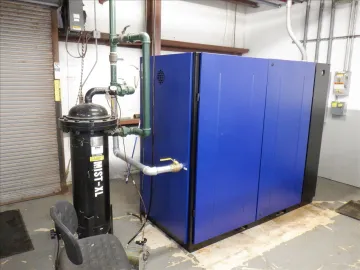
An aerospace manufacturer worked with Renew Energy Partners to address energy waste caused by variable compressed air demand across a 30-building campus. By upgrading to a variable-speed drive compressor, repairing leaks, and improving air drying under an energy-as-a-service model, the project reduced energy use by more than 270,000 kWh annually while supporting long-term decarbonization goals.
How to Avoid the Most Common Bus/Coach Kneeling Failures

Kneeling modules are quickly becoming the centerpiece of accessible vehicle equipment. This trend began with passage of the Americans with Disabilities Act (ADA) in 1991. Prior to the ADA, about 40% of all transportation vehicles were accessible to persons with disabilities.

Class Zero Air Measures Race Car Performance

A four thousand, five hundred and fifty pound (4550 lbs.) race car is running at 170 mph and facing wind resistance of 150 mph. The car then enters a curve creating a three-degree “yaw” (the change in angle from the direction the car is headed and the airstream).  The car struggles to maintain speed as the yaw changes and the dynamic downforce load on the car changes.  Suddenly, the driver-less car comes to a stop on the stainless-steel track...

Audit of Transit-Bus Manufacturing

New Flyer Industries is a Winnipeg based heavy duty bus manufacturer, supplying vehicles to the US and Canadian markets.  The company specializes in vehicles with†alternative-fuel drives such as electric trolleys, gasoline-electric and diesel-electric hybrid vehicles; as well as standard diesel buses.

Audit Savings for Motor Coach Industries

Motor Coach Industries, headquartered in Schaumburg, Illinois, is the largest manufacturer of intercity tour coaches for the tour, charter, line-haul, scheduled service, commuter transit and conversion markets in the U.S. and Canada. The company operates a four screw-type air compressor system at its Clarence Avenue plant in Winnipeg. To maintain adequate system pressure at the plant, Motor Coach was forced to run all four compressors 24 hours a day, seven days a week.