Industrial Utility Efficiency

Air Treatment/N2

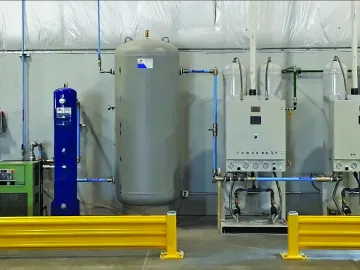
Producing nitrogen locally is an excellent way to reduce nitrogen costs and ensure a continuous supply of nitrogen gas at the appropriate purity. The ideal nitrogen generation solution varies by application, based on the specific levels of nitrogen purity, flow, pressure and dryness that are required. Environmental factors such as air quality, humidity and temperature also affect the performance of the system.

Sizing Air Compressors for Spray Finishing

Achieving a high-quality finish on a coated product, whether it’s painted or powder coated, is dependent on a variety of variables that impact coating quality before material ever comes out of a spray gun. For example, it’s essential to have the proper paint agitators, paint pumps, spray guns, hoses, line sizes and pump cycle rates. But an even bigger requirement is a properly sized compressed air system to effectively operate the pneumatic painting and powder coating equipment. 

Plastics Plant Audit Improves VSD Air Compressor Arrangement

Estimates based on the captured data show 567,000 kWh costing \$23,375 per year, while feeding an average of 240 cfm to the plant. Estimated savings for upgrading the VSD air compressor to higher efficiency and higher capacity, converting failing desiccant compressed air dryers to cycling refrigerated compressed air dryers and reducing wasted demand total \$9,160 per year, resulting in 39% lower energy use. 

Four Compressed Air Demand Reduction Projects

A large food manufacturing operation in the U.S. Midwest spends $529,000 annually on energy to operate the compressed air system.  The plant currently has two supply-side systems that operate and feed two different distribution networks at two different pressures. One compressed air system is at 115 psig (medium pressure system) and the low-pressure system is at 30 psig. The compressed air equipment for both systems is located in four areas throughout the facility.  

Defining the Purity of Facility Generated Nitrogen Gas

While oxygen is unquestionably the most important gas in our atmosphere, as it is essential for most animals and human life, nitrogen is the most widely used atmospheric gas.  Nitrogen is the go-to gas for countless industrial, medical, and scientific applications. This is because nitrogen is in vast supply, inert, and possesses the desirable characteristics of being colorless, odorless, and tasteless. The purity of nitrogen significantly affects the outcome of the application for which it is used and how the industry measures the purity of nitrogen gas is the focus of this article.       

Boost Performance with On-Site Oxygen and Nitrogen Generation

The impact of compressed air on industries globally is undeniable, spanning from small tire shops to vast oil and gas sectors, as well as specialized domains like laboratories and pharmaceuticals. Amid this industrial transformation, many have taken control by employing in-house air compressors, air dryers, and related equipment to autonomously generate compressed air. In-house compressed air generation eliminates the need for relying on external sources, whether through cylinder bulk packs, Dewars, or tankers delivering compressed air.

Facility Evaluates Air Compressors to Increase Nitrogen Purity with Nitrogen Generators

Over the last two decades, there has been a significant increase of manufacturing facilities deciding to produce their own nitrogen on-site, using compressed air systems and nitrogen generators. They are choosing on-site nitrogen generation, instead of purchasing and receiving deliveries of nitrogen by the cylinder or having a “Nitrogen Over the Fence” supplier.  

On-Premises Nitrogen Generation Addresses Carbon Dioxide Supply Concerns for Breweries

The initial cost of a nitrogen generation system may be greater than high-pressure cylinders and liquid nitrogen containers, but most companies will reach a return on investment within 12-18 months with proper sizing of the system based on process demands. Breweries typically experience savings associated with gases of 50-75% by switching to on-premises nitrogen generation. If a regular maintenance schedule is followed, PSA nitrogen generation systems can have a life expectancy of 15-20 years. 

Metal Fabricator Measures Nitrogen Use, Receives a Surprise

Nitrogen is used in many facilities for a variety of purposes. The most common source of N2 is through the use of bulk liquid storage. A plant owner was recently surprised to learn that a large portion of his N2 was disappearing, without ever being used by his production process. This article discusses where it went and what we could do about it.

Air Compressor Inlet Issues with Airborne Contaminants

Just as many ambient air issues with regard to the actual equipment operating environment are created by personnel and can be corrected by personnel, inlet air contamination is always created by humans and there is almost always a correction that will either eliminate the issue or mitigate the effect.

Pure Gas Testing-The Benefits of Point of Use Sampling

Regular testing of pure gases helps to ensure the safety of consumers and of end products. Whether the pure gas is used directly for medical patients, or in the manufacturing of food, beverages, or pharmaceutical products, quality is of the highest importance. Inadequate levels of purity or unsafe contamination can be detrimental to the products or consumers.