Industrial Utility Efficiency

System Assessments

We asked a hand-selected list of original equipment manufacturers, independent compressed air system sales and service companies, manufacturing plants and independent system auditors to share their thoughts, highlighting the changes they’ve seen over the past 20 years, then predicting what the next 20 years will bring.

Industrial Blowers Reduce Energy Use in Aluminum Casting Plant

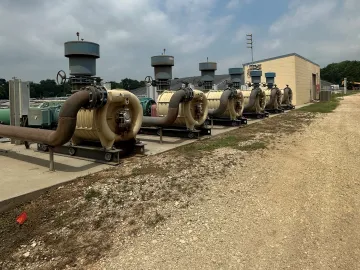
This article explores how a focused engineering intervention driven by data and a clear understanding of process requirements led to a transformative change on a aluminum production plant.  By switching from traditional compressed air systems to low-pressure industrial blowers the plant not only maintained product quality, but also achieved a dramatic reduction in energy use saving nearly \$455,000 annually.

Texas Recycling Plant Saves Water with Air-Cooled Air Compressors

There are multiple compressed air applications in a waste management facility. This new recycling center uses laser-guided optical sorters to divide waste, with no human involvement on the sorting line. Laser optics determine what type of material each scrap is, then compressed air jets maneuver each piece to its collection area. Compressed air also powers handheld blow guns used for cleaning, as well as the bundling and packaging system. 

Selecting the Appropriate Nitrogen Gas Purity Level for Your Application

Producing nitrogen locally is an excellent way to reduce nitrogen costs and ensure a continuous supply of nitrogen gas at the appropriate purity. The ideal nitrogen generation solution varies by application, based on the specific levels of nitrogen purity, flow, pressure and dryness that are required. Environmental factors such as air quality, humidity and temperature also affect the performance of the system.

Cardinal Glass Increases Throughput with Dry Compressed Air

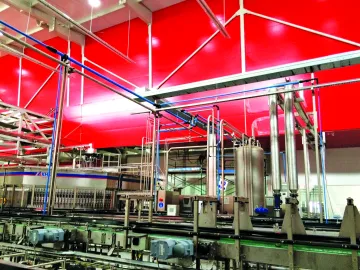
With over 49 locations and 10,000 employees, the company’s Casa Grande, AZ, plant specializes in tempering, taking annealed or raw glass, cutting it to size, running it through a 1,250°F (677°C) oven and then using a pressurized air system to quench the glass and turn it into safety glass. Compressed air powers the plant’s belt systems that transfer materials, the seaming system that rounds the corners and the washer system that cleans particulates off glass before it goes into the furnace.

High-Altitude Mining and Steel Production in Peru

Before CAGI data sheets were created, air compressor distributors and their customers could only go by the manufacturers’ claims. He found there wasn’t any uniformity to the numbers manufacturers put out, so making comparisons was challenging. Some compressed air manufacturers measured capacity from the bare airend, while others measured from the air compressor’s outlet.

After the Energy Audit, What’s Next?

After an energy audit is performed, how much value has been created? The answer is zero. It's the work done after the audit that makes the difference between a binder on a shelf gathering dust and an executed energy conservation measure creating value. Your management wants results, not reports.

Compressed Air Pressure Loss Solutions for the Last 30 Feet

The significance of material quality used within air compressor rooms and main distribution networks has been increasingly recognized, leading to advancements in energy conservation. However, this focus on material enhancements has not always translated to the last 30 feet of the compressed air system, an area notorious for its loss in efficiency. Here, 30 to 40% of a compressed air system's total energy losses can occur.

How Breweries Save By Switching to Nitrogen Gas

The brewing industry has long used carbon dioxide (CO2) in various brewing processes. Carbon dioxide has been the workhorse gas for the industry. It’s not only used to carbonate beer and give it fizz, but also to purge oxygen from tanks and lines to prevent spoilage and preserve freshness and flavor throughout the entire brewing process. 

The Effect of Increased Storage Capacity on Load/No Load Air Compressors

Fixed speed, lubricated, rotary screw air compressors offer three different part-load control methods: inlet modulation, load/no load and variable displacement. Over the years, load/no load has become the predominant control method offered by fixed-speed air compressor manufacturers. 

Leak Detection Leads to Energy Savings for Cabinet Manufacturing Plant

The plant’s compressed air system consisted of multiple air compressors from different manufacturers, with capacities ranging from 100 to 250-horsepower (hp), for a total system capacity of around 1,100-hp. The plant’s average compressed air demand was 2,300 cfm, with peaks reaching 3,500 cfm. System pressure fluctuated between 105 and 110 psi (7.2-7.6 bar).

Compressor Controls

Wood-based materials manufacturing plant transformed its compressed air system from an invisible

Piping Storage

Efficient compressed air distribution depends on proper piping design to balance flow, pressure and

End Uses

Without compressed air monitoring, up to 30% of the compressed air generated goes to waste. This

Pressure

Before CAGI data sheets were created, air compressor distributors and their customers could only go

Air Treatment/N2

Producing nitrogen locally is an excellent way to reduce nitrogen costs and ensure a continuous

Leaks

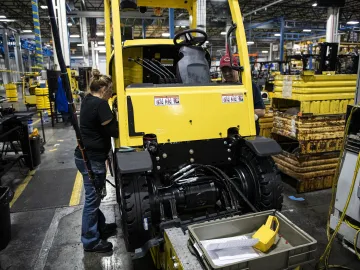
Hyster-Yale’s Greenville, North Carolina, plant reduced compressed air waste through employee-driven

Pneumatics

Current Good Manufacturing Practices (cGMPs) under FSMA CFR Title 21 117.40 is the cornerstone of

Vacuum/Blowers

There is no single right approach to putting the necessary volume and pressure of air in the pipe to