Industrial Utility Efficiency

System Assessments

We asked a hand-selected list of original equipment manufacturers, independent compressed air system sales and service companies, manufacturing plants and independent system auditors to share their thoughts, highlighting the changes they’ve seen over the past 20 years, then predicting what the next 20 years will bring.
Sizing Air Compressors for Spray Finishing

Achieving a high-quality finish on a coated product, whether it’s painted or powder coated, is dependent on a variety of variables that impact coating quality before material ever comes out of a spray gun. For example, it’s essential to have the proper paint agitators, paint pumps, spray guns, hoses, line sizes and pump cycle rates. But an even bigger requirement is a properly sized compressed air system to effectively operate the pneumatic painting and powder coating equipment. 

Optimizing Positive Displacement Air Compressors for Energy Efficiency

This article explores the importance of understanding the key system parameters driving the overall efficiency of positive displacement air compressor systems. We will also review two case studies to illustrate how low-tech, low-cost system improvements can lead to significant energy savings and performance improvements.

Tools for Detecting Compressed Air Leaks

This article discusses methods and techniques to increase the efficiency of a compressed air installation in both the short and long term. Start by identifying and repairing compressed air leaks, which can result in a decrease in energy use and a savings in operating costs. There are various methods for detecting and quantifying leaks. Simple methods provide a rough indication of the leakage level.

The Benefits of Compressed Air System Audits

Industrial plants have long used sensors and gauges to monitor and record data critical to plant operation. Sensors were installed permanently and integrated with complex SCATA, MODBUS and other plant-wide systems using computer servers and control rooms for monitoring. These systems provide critical data. However, after the system is installed, adding additional sensors for secondary energy analysis or troubleshooting of smaller systems, such as compressed air systems, can be cost-prohibitive.

Plastics Plant Audit Improves VSD Air Compressor Arrangement

Estimates based on the captured data show 567,000 kWh costing \$23,375 per year, while feeding an average of 240 cfm to the plant. Estimated savings for upgrading the VSD air compressor to higher efficiency and higher capacity, converting failing desiccant compressed air dryers to cycling refrigerated compressed air dryers and reducing wasted demand total \$9,160 per year, resulting in 39% lower energy use. 

For Abundant Air Compressor, Reliability Is a Best Practice

Compressed Air Best Practices® Magazine sat down with Richard Compton, Owner of Abundant Air Compressor of Springfield, MO, and one of his clients, Kenny Schulte, Owner of A-1 Custom Car Care, to talk about why this regional air compressor installation and maintenance company is known for its excellent service.

Compressed Air Audit Uncovers Waste at a Plywood Plant

A comprehensive compressed air assessment was conducted at a Canadian plywood facility. The purpose was to determine the proper size of any new air compressors and to look for ways to improve the system. Analysis of the data and a demand-side audit finds significant energy savings could be gained if the system is upgraded through air compressor replacements and demand-side reductions.

How IoT and AI Transform Compressed Air System Management

In the rapidly evolving landscape of industrial automation, the integration of internet of things (IoT) and artificial intelligence (AI) is reshaping production and utility management. Compressed air system management stands out as an area undergoing significant transformation. Compressed air systems are critical in many industries, serving as a power source for tools, machinery and various processes. 

Hitting the Gas on Efficient Compressed Air Delivery at Hitachi Astemo

Hitachi Astemo’s efficiency gains will turn into significant cost savings. In this article we outline the savings reported by the client since the changeover was complete. It shows a sizeable reduction in energy costs, air compressor energy costs and maintenance costs to the tune of 21.95%, 24.14% and 24.14%, respectively. Total operating costs to date have dropped from \$1,277,394 to \$941,959 with the new system a decrease of 26.25%.

Plastic Pipe Selection in Industrial Compressed Air Applications

Compressed air piping systems contain high amounts of stored energy, which can be dangerous if released suddenly. Most plastic pipe systems are not suited for this application. The Occupational Safety and Health Administration (OSHA) has issued rulings regarding the use of thermoplastic piping materials for these applications. 

Compressor Controls

Wood-based materials manufacturing plant transformed its compressed air system from an invisible

Piping Storage

Efficient compressed air distribution depends on proper piping design to balance flow, pressure and

End Uses

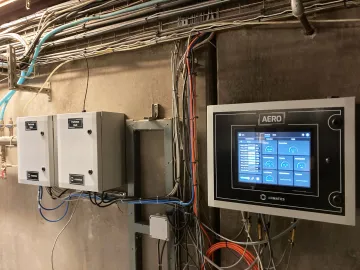
Without compressed air monitoring, up to 30% of the compressed air generated goes to waste. This

Pressure

Before CAGI data sheets were created, air compressor distributors and their customers could only go

Air Treatment/N2

Producing nitrogen locally is an excellent way to reduce nitrogen costs and ensure a continuous

Leaks

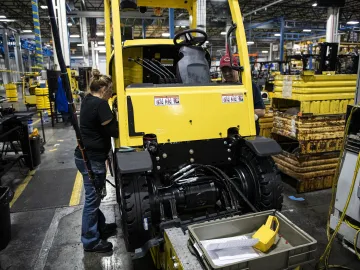
Hyster-Yale’s Greenville, North Carolina, plant reduced compressed air waste through employee-driven

Pneumatics

Current Good Manufacturing Practices (cGMPs) under FSMA CFR Title 21 117.40 is the cornerstone of

Vacuum/Blowers

There is no single right approach to putting the necessary volume and pressure of air in the pipe to