Industrial Utility Efficiency

System Assessments

We asked a hand-selected list of original equipment manufacturers, independent compressed air system sales and service companies, manufacturing plants and independent system auditors to share their thoughts, highlighting the changes they’ve seen over the past 20 years, then predicting what the next 20 years will bring.

Outsourcing Compressed Air Gives GKN Sintered Metals Peace of Mind

With an eye toward strengthening its competitive edge, GKN opted for a new approach for the compressed air it uses to power metal molding machines in addition to a variety of other applications at its manufacturing facility. After careful analysis and planning with the Total Equipment Company located in Coraopolis, Pennsylvania, GKN opted to move beyond its aging compressed air system – and instead – outsource compressed air as a utility. Doing so allowed it to free up valuable floor space, while also achieving peace of mind since it can now count on a fixed cost for a reliable compressed air supply for years to come.

Chemical Packaging Plant Shaves 41% Off Annual Electric Bill with Compressed Air Energy-Saving Measures

A chemical packaging facility had done everything right when they last upgraded their compressed air system a few years ago. They installed a Variable Speed Drive (VSD) air compressor and implemented other energy efficiency measures, but plant expansions caused increased system demand, which exceeded the capacity of the system. The packaging lines were now seeing low pressure, causing shut downs in production. And projections showed plant demand would increase even further.

Keeping Compressed Air Leaks to a Minimum at Petrochemical Plants

In terms of compressed air systems, it’s not unusual to see a plant with 10 to 15 air compressors, each of which is rated to provide 3,000 to 4,000 scfm of air. The air is used for everything from moving product, to powering pneumatic tools, pumps, and fans, to cleaning. There are easily 1,500 pneumatic control valves at a single plant.

Capital & Maintenance Cost Avoidance When Metal Grinding Loads Rise

Plant personnel had experienced ongoing problems with its process grinder performance due to unstable compressed air pressure. This created potential problems in terms of product quality. Grinders do not work properly without the proper pressure. Additionally, plant staff wanted to address these concerns, prior to a proposed 30% increase in production, and suggested raising the header pressure from the current operating pressure of 98 psig to 125 psig. The thought behind this was if the pressure from the header to the grinder process was dropping to 63 psig, then raising the pressure to the process would give the grinders enough pressure to work through higher peak production times.  

A Case for KPI Measurement in Compressed Air Management

All industrial facilities use some form of compressed air, and in most, the air compressors consume a significant amount of the total energy bill. A facility with a good energy management system is likely to identify their compressed air system as a significant energy user (SEU). If the facility were using an energy management standard, such as ISO 50001, they would be required to assess and track the energy consumption of all their SEU’s. In the case of the metal processing facility, they were measuring the output of more than 250 devices within the plant, including building heaters, RTU’s, dust collectors, and also tracking the consumption of their electricity, natural gas and water. 

Bearing Cooling: A Common Misapplication of Compressed Air and How to Fix It

One observation I’ve made from 30 years of working with compressed air systems is to never underestimate the ingenuity of plant personnel when it comes to misapplying compressed air. We see something new in virtually every plant we visit, but one of the more common problems we encounter involves the use of expensive air for bearing cooling. 

Reviewing Dust Collectors and Nitrogen in a Food Manufacturing Plant

This major food manufacturing plant in the Midwest uses compressed air and onsite nitrogen generation to operate multiple snack production and packaging lines. The plant spends an estimated \$430,344 annually on energy to operate its compressed air system based on an average rate of 4.5 cents per kWh.

Lessons Learned: Saving Energy Costs with Heated Blower Desiccant Dryers

Experienced auditors become wary when they see desiccant dryers installed in customers’ plants. These dryers are required when a plant needs instrument-quality compressed air, or when compressed air piping is exposed to freezing temperatures. However, while desiccant dryers can gain this level of quality, the energy cost of stepping up from a dewpoint of 35°F to a level of -40°F increases quite considerably. To attempt to reduce the energy costs of drying to these low levels, heated blower desiccant styles may be used. This article describes three common desiccant dryer types, as well as some experiences, good and bad, with heated blower types.

Leveraging Data Acquisition to Drive Actionable Intelligence

In most industrial plants, data is everywhere. It resides in flow through pipes, pressure in tanks, vibration on rotating equipment, temperatures in heat exchangers, and electrical energy power consumption in motors. If we can acquire this data and make sense out of the patterns we can take actions to make our plants more efficient and reliable.

Compressor Controls

Wood-based materials manufacturing plant transformed its compressed air system from an invisible

Piping Storage

Efficient compressed air distribution depends on proper piping design to balance flow, pressure and

End Uses

Without compressed air monitoring, up to 30% of the compressed air generated goes to waste. This

Pressure

Before CAGI data sheets were created, air compressor distributors and their customers could only go

Air Treatment/N2

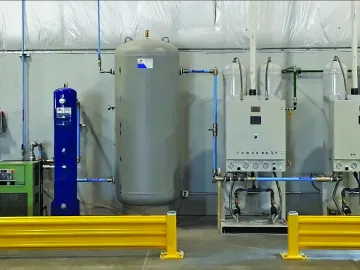
Producing nitrogen locally is an excellent way to reduce nitrogen costs and ensure a continuous

Leaks

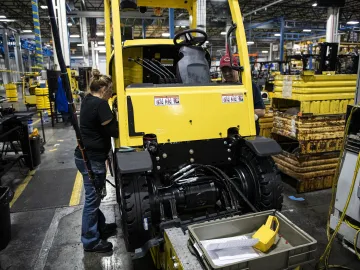
Hyster-Yale’s Greenville, North Carolina, plant reduced compressed air waste through employee-driven

Pneumatics

Current Good Manufacturing Practices (cGMPs) under FSMA CFR Title 21 117.40 is the cornerstone of

Vacuum/Blowers

There is no single right approach to putting the necessary volume and pressure of air in the pipe to