Industrial Utility Efficiency

Technology

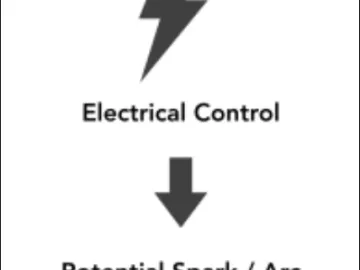
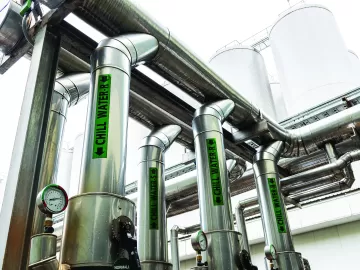
Learn how engineers can safely remove moisture from compressed air systems in hazardous environments by eliminating ignition risks through pneumatic controls. This article explores design considerations, performance characteristics and reliability factors for regenerative desiccant dryers operating in Class I, Division 1 locations.

Trust Through Testing: Inside the CAGI Performance Verification Program

To further support transparency and confidence in compressed air system equipment performance, CAGI established the Performance Verification Program. This third-party testing initiative verifies that participating manufacturers’ published performance data, such as energy consumption, flow rate and efficiency, are accurate and consistent with industry standards.

Pressure Dew Point Monitoring: The Key to ISO 8573-1 Compliance

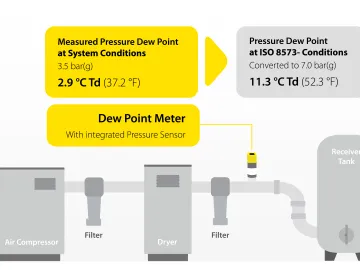
The ISO 8573-1 standard defines clear limits for various compressed air quality parameters. This helps users classify their systems consistently, compare results across applications and set the right requirements for specific processes. This article explains the key points of the ISO 8573 standard and guides you through the correct way to measure and classify pressure dew point for compliance.

Texas Recycling Plant Saves Water with Air-Cooled Air Compressors

There are multiple compressed air applications in a waste management facility. This new recycling center uses laser-guided optical sorters to divide waste, with no human involvement on the sorting line. Laser optics determine what type of material each scrap is, then compressed air jets maneuver each piece to its collection area. Compressed air also powers handheld blow guns used for cleaning, as well as the bundling and packaging system. 

Selecting the Appropriate Nitrogen Gas Purity Level for Your Application

Producing nitrogen locally is an excellent way to reduce nitrogen costs and ensure a continuous supply of nitrogen gas at the appropriate purity. The ideal nitrogen generation solution varies by application, based on the specific levels of nitrogen purity, flow, pressure and dryness that are required. Environmental factors such as air quality, humidity and temperature also affect the performance of the system.

The Industrial Sustainability 2025 Best Practices EXPO & Conference Show Report

Compressed Air Best Practices® Magazine launched its first event in Europe, the Industrial Sustainability Best Practices EXPO & Conference, in June 2025 in Barcelona, Spain. Designed to educate and connect factories and specifying engineers on the optimization of industrial compressed air, vacuum and cooling water systems, the event featured 12 hours of conference sessions, exhibits and the first Compressed Air Challenge training to take place in Europe. 

The 2025 AICD Show Report

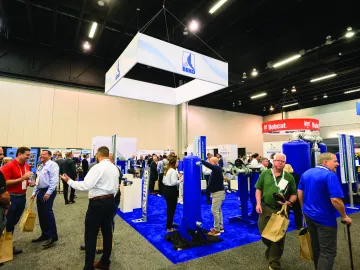
The Association of Independent Compressor Distributors held its annual trade show in Louisville, KY, April 27-29, 2025. Participating distributor members and guests enjoyed the AICD trade show, guest speakers, a golf tournament and a visit to the Louisville Slugger Museum & Factory. This report presents a sampling of the trade show exhibits (by technology, alphabetically) to share company and technology news. 

Cardinal Glass Increases Throughput with Dry Compressed Air

With over 49 locations and 10,000 employees, the company’s Casa Grande, AZ, plant specializes in tempering, taking annealed or raw glass, cutting it to size, running it through a 1,250°F (677°C) oven and then using a pressurized air system to quench the glass and turn it into safety glass. Compressed air powers the plant’s belt systems that transfer materials, the seaming system that rounds the corners and the washer system that cleans particulates off glass before it goes into the furnace.

Pneumatics and Vacuum Generators Power Robotics at Automate 2025

Automate 2025, showed attendees how to make their industrial plants more efficient with robotics. Throughout the conference, robotic arms shuttled packages, burgers and even macarons with speed and accuracy. Driving this new technology was a complex network of pneumatic cylinders and pick-and-place automation powered by pneumatic vacuum generation. Innovation makes these proven technologies more efficient than ever.

The Case For Low Horsepower, Two-Stage Rotary Screw Air Compressors

The isentropic efficiency of single-stage rotary screw air compressors, as reported by CAGI data, typically falls between 65% and 75%. Since isentropic efficiency is the ratio of ideal work to actual work, this range suggests these air compressors consume roughly 33% to 54% more power than the theoretical minimum for the given air pressure output. Much of the discussion in this article is theoretical since low-horsepower two-stage air compressors are new to the U.S. market. 

IPS Advises Midwest Industry on Compressed Air Efficiency

IPS supplies compressed air to a lot of machinery running outdoors, such as dust collectors and feed mills on grain elevators, as well as to other equipment in environments lower than 32°F (0°C). Temperatures that low require desiccant dryers. Hoffman helps his customers sort out their options and determine which type of desiccant dryer – heatless, heated purge, heated blower purge – is ideal for their needs.

Air Compressors

From October 29-31, 2024, professionals who operate, maintain and design industrial compressed air,

Air Treatment/N2

A modular nitrogen generation system integrated with compressed air infrastructure enabled on-site

Blowers

The plant upgrades, in combination with a progressive management strategy, allows the plant to

Compressor Controls

Hitachi Astemo’s efficiency gains will turn into significant cost savings. In this article we

Instrumentation

The ISO 8573-1 standard defines clear limits for various compressed air quality parameters. This

Pneumatics

The U.S. Department of Energy’s 2002 Motor Market Assessment established that pumping systems offer

Vacuum

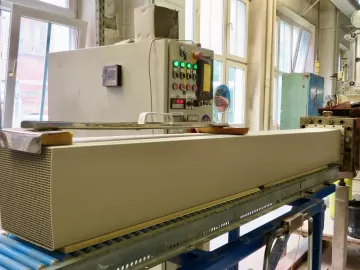
Industrial ceramics have been produced in Hermsdorf, near Jena, since 1890. In the past, high

Cooling Systems

The AIM (American Innovation and Manufacturing) Act was finalized by the US government at the end of