Industrial Utility Efficiency

Metals

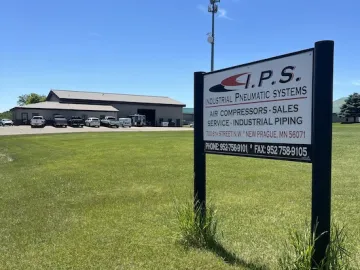
IPS supplies compressed air to a lot of machinery running outdoors, such as dust collectors and feed mills on grain elevators, as well as to other equipment in environments lower than 32°F (0°C). Temperatures that low require desiccant dryers. Hoffman helps his customers sort out their options and determine which type of desiccant dryer – heatless, heated purge, heated blower purge – is ideal for their needs.

Canadian Steel Processor Optimizes Compressed Air at Two Facilities

A steel distribution and processing company has upgraded and consolidated the compressed air systems in two of their distribution and processing facilities for big energy savings. The previous compressed air systems were running in modes of operation with very low efficiency. A complete replacement of the two systems with new air compressors and dryers has reduced the energy consumption significantly.

Canadian Glass Plant Optimizes Autoclave Compressed Air

The facility uses a large amount of electricity to manufacture laminated glass in the autoclave process. This process is the largest consumer of compressed air in the facility which made compressed air a major target in reducing energy costs for the facility. As the volume of compressed air in the autoclave is significant, the system is constantly pressurized with large 150 HP air compressors to reduce production times and fill times of the autoclave.

Metal Fabricator Keeps Compressed Air Demand Low

The company specializes in fabrication of precision assembled customized parts for OEM’s and system integrators. Since 1997 the company has steadily grown in size and capacity as the demand for its high quality fabrications has increased.  Through the years, many new CNC machines, laser cutters and powder coat painting operations have been added, but with all the expansion the facility has amazingly kept the plant compressed air consumption low. This has been achieved by following excellent “best practice” compressed air efficiency principles and by keeping watch on system waste.

Compressed Air is a Star at Ball Corporation

Paying close attention to compressed air use is paramount for identifying potential energy-saving projects. The engineering team at Ball Corporation has been well aware of this fact for years. An active member in the Environmental Protection Agency’s ENERGY STAR® program, Ball Corporation scrutinizes manufacturing processes to maximize the energy efficiency of compressed air systems in each of its plants.

Control Improvements at Forge Plant Make Big Impact

Metaldyne Performance Group (called MPG in this article) Plant 1 in Columbus, Indiana (formerly known as Impact Forge) has made significant efficiency improvements to their compressed air system.  With the help of their service provider, IAC Air Compression, MPG has implemented some innovative control on their existing air compressors, added new air compressors with variable capacity control, and tied everything together with a modern central controller.  This installation has been recognized for its wise use of power by their power utility Duke Energy.

Atlas Machine Helps Ahresty Save $151,000 with Master Controls

Ahresty Wilmington Corporation (AWC) was founded in 1988 and is located in Wilmington, Ohio. Currently AWC employs over 900 people with sales totaling \$192 million. They have grown steadily, all while continuously improving and staying on the leading edge of technology. AWC is a tier-1 automotive supplier servicing their entire customer base in the United States. AWC has established an efficient and integrated production system that incorporates die-casting, finishing, machining, and assembly operation using just-in-time production methods to provide its customers with quality products at a competitive price.

What is In-Process Air Gauging?

In recent years, we have seen an upward trend of higher production manufacturers wanting to integrate their air gauging quality checks from a stand-alone, outside-of-machine device where the operator is performing a manual check to an automated in-process gauge. There are several reasons for this trend, including higher quality standards, tighter tolerances, as well as running a leaner operation. The benefits are 100 percent inspection of the required geometric callout, as well as handshaking between measuring device and machine to make each piece better than the prior one. It also removes any bad parts.

Steel Forging Facility Maximizes Investment in Compressed Air System

When a company is considering making an investment of more than a million dollars in system upgrades, it is crucial for them to review all options to get the best return. By exploring energy efficiency impacts throughout the entire compressed air system, vendors can propose projects resulting in both a larger sale for them and increased financial benefits for their customers, while still meeting capital expenditure guidelines. This “best of both worlds” scenario was evident when a foundry in the Midwest was evaluating options for replacing its steam system used to drive the plant’s forging hammers.

Steel Mill Energy Audits Include Air Compressor Performance Testing

EnSave, an energy auditing company based in Richmond, Vermont, recently performed compressed air audits at two facilities of a leading U.S. steel manufacturer. Both plants are mills that melt, cast, and roll steel to produce a variety of products, including: rebar, merchant bar, steel flats, rounds, fence posts, channel bar, steel channels, steel angles, structural angles and structural channels. These products are used in a diverse group of markets, including: construction, energy, transportation and agriculture. Compressed air is provided at 100 psig in both plants for a variety of applications — from optical sensor cooling to pneumatic cylinders for stacking finished products.

Aluminum Plant Meters Compressed Air Flow to Solve Capacity Issues

A major Midwestern aluminum plant was experiencing dwindling compressed air capacity, primarily due to air leaks. If those capacity issues went unresolved, the facility would have needed rental compressors to keep up with demand. Instead, they turned to flow metering to identify and fix the leaks. In this article, they share their solutions with others who may be having similar difficulties.