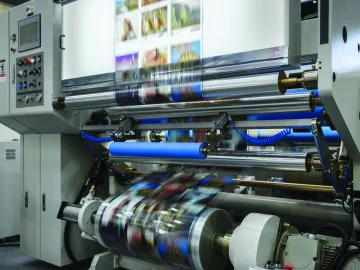
The Trinity Mirror Group print works on Oldham is one of the UK’s largest newspaper printers. The nine presses in the facility produce around 1million papers every day, including the Independent, the Daily Mirror and a range of local, regional and sports titles. Printing on this scale does not come cheap in energy terms, however. The plant’s annual electricity bill is in the order of £1.5millon. With energy prices on the rise, and a strong desire to improve environmental performance and reduce its carbon footprint, the plant’s management has recently embarked on a project to cut energy use substantially.
In the 1970s, the use of filtration in air quality management in pharmaceutical production, hospitals, and medical device manufacturing facilities became increasingly important and increasingly of interest to regulatory agencies. The air quality field was growing. From the air moving into and out of clean rooms to the protection of surgical environments to the expansion of the global medical drug industry, compressed air began to play a larger role—a role that continues undiminished (and, in fact, has increased substantially) today.
Spoetzl Brewery is the nation’s fourth largest craft brewer, and although founded 102 years ago, the Shiner TX-based company uses the latest, most efficient technologies - along with its traditional, time-tested beer production protocols - to make its range of popular Shiner beer brands. Among the advanced brewing technologies Spoetzl uses are two Miura ultra-low NOx modular on-demand steam boilers, which provide multiple advantages for the unique needs of the craft-brewing industry
This food industry factory, located in California, was spending \$386,533 annually on energy to operate their compressed air system. This system assessment detailed eleven (11) project areas where yearly energy savings totaling \$154,372 could be found with a investment of \$289,540. A local utility energy incentive, paying 9 cents/kWh, provided the factory with an incentive award of \$159,778. This reduced the investment to \$129,762 and provided a simple ROI of ten months on the project.
A plastics molding plant had engaged us to conduct an ‘on-site’ Energy Assessment of their facility. The annual ‘spend’ for electricity, natural gas, and water was about \$3.2 million for this modern 275,000 square foot, fully air-conditioned facility. During the Review, several opportunities were identified and delineated in lighting, HVAC, process ventilation, the water systems and energy supply contracts. However, the most significant savings were in their compressed air system.
Treating compressed air as a true utility and outsourcing the entire process is a growing trend in the industry. If a plant does not generate their own power, provide their own water or deliver their own natural gas, then why not treat compressed air requirements in the same manner? This article will use a recent project as a case study to show the benefits one factory received by making the decision to outsource compressed air like a utility.
This facility is part of a corporation producing molded plastic products. There are many injection and extrusion molding processes. The factory was spending \$94,934 annually on energy to operate their compressed air system. This system assessment detailed seven (7) project areas where yearly energy savings totaling \$53,191 could be found with a minimal investment of \$4,170.
By Tom Taranto and Ram Kondapi for the Compressed Air Challenge®
International Wire Group, Inc. (IWG) headquartered in Camden, NY is the largest bare copper wire and copper wire products manufacturer in the United States with expanding operations in Europe. Products include a broad line of copper wire configurations and gauges with a variety of electrical and conductive characteristics , which are utilized by a wide variety of customers primarily in the industrial and energy, electronics, data communications, aerospace and defense, medical electronics and devices, automotive, and consumer and appliance industries.
Thomas Dwyer, Product Manager- International Projects and John Bridges, Marketing Manager AVENTICS Corporation
Machine builders aiming to improve the energy efficiency of their machines tend to focus on using energy media other than pneumatics (typically electro-mechanical or hydraulic) since pneumatics, as traditionally applied, is viewed by some as inefficient due to factors like leakage and over-pressurization (i.e.: supplying a higher pressure in an actuator to accomplish a task which is endemic in practice). But they shouldn't, with its low cost of ownership, pneumatics when properly used remains a viable and many times preferable energy source for a given application. When generating and using compressed air, it's true that there are many places in the system where energy can be lost, however targeted measures within a comprehensive energy saving concept can prevent these losses and significantly reduce energy consumption at the machine level.
Compressed Air Best Practices® Interviewed Dean Smith, iZ Systems.
The PET industry is in a state of flux right now. A number of new bottle blowing facilities are being brought on-line. They are in the “discovery” phase right now as they realize how challenging the required compressed air systems are to manage – from an energy efficiency standpoint. The average high-volume stretch blow molder (SBM) working with PET usually has 2,000 to 4,000 horsepower of installed air compressors with the related energy costs running between \$1 to \$4 million per year. This typically represents 35-40% of the facilities’ total energy bill.