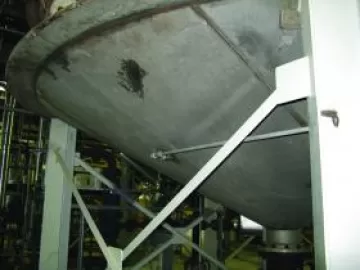
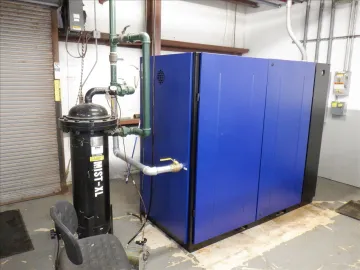
The dust is collected on the bag or fingers, and when the cake of dust is of appropriate thickness and structure, a pulse or pulses of compressed air hits or shocks the bag and knocks the cake off. This pulse may sometimes be accompanied by physical shaking and even reverse air flows, depending on design.
By Ron Marshall, Marshall Compressed Air Consulting
Nitrogen is used in many facilities for a variety of purposes. The most common source of N2 is through the use of bulk liquid storage. A plant owner was recently surprised to learn that a large portion of his N2 was disappearing, without ever being used by his production process. This article discusses where it went and what we could do about it.
By Ron Marshall, Marshall Compressed Air Consulting
A premium whiskey distillery was seeking to renew their compressed air system and meet their corporate mandate in making their production facility more efficient. The first step on the road to improvement was having their compressed air system assessed. This article discusses some of the findings of the system study, which saved significant energy, improved system reliability, and captured a significant utility incentive to help with the study costs and the cost of a new compressor.
By Mike Lenti, Senior Auditor, Compressed Air Consultants
The current cost to operate the compressed air system is \$139,100 annually, and the proposed measures will reduce it by \$50,700 annually. The proposed cost to complete the measures is $47,600 providing a simple payback of 11 months. The cost included in the Action Plan includes engineering, project assistance, services to maintain the gains, and a 10% contingency.
By Mike Grennier, Compressed Air Best Practices® Magazine
When the design capabilities of an installed compressed air system didn’t align with real-world production needs at its ore processing mill in northern Michigan, Eagle Mine decided to move beyond theoretical compressed air concepts and deal in reality. After thorough analyses of its compressed air challenges and implementing a variety of solutions, the team at the mill bolstered the operation’s ability to efficiently mill approximately 2,200 metric tons of ore per day.
By Richard Huguenor, Business Development Manager for Oil Free Products at Sullair, LLC.
When selecting an air compressor for your manufacturing operation, the common choice is the industry-standard rotary screw compressor. Known as the work horse of compressed air machinery, the rotary screw compressor comes in a multitude of sizes and power levels. However, centrifugal compressors have seen some exciting technological progress in recent years and offer a wide range of pressures, flow and turndown. Long known for their longevity and durability, they offer higher efficiency, even qualifying for energy rebate programs offered by local utilities and all, notably, produce Class 0 oil free air.
Sustainability is a high priority for today’s consumer packaged goods (CPG) companies. Driven by environmental responsibility, government regulations and customer preferences, CPGs are actively seeking ways to decarbonize their packaging lines and use eco-friendly packaging materials. Many have started monitoring the energy consumption of their equipment in real time and upgraded critical areas of their packaging processes using two key technologies: pneumatics and ultrasonic welding.
By Mike Grennier, Compressed Air Best Practices® Magazine
“I’ll say this politely. At the end of the day, we shouldn’t have to worry about compressed air, right? We’ve got more important things to worry about,” English said, adding how a recent partnership with Atlas Copco Compressors and other decisions associated with compressed air have hit the mark. “Without clean, compressed air we wouldn’t be able to complete our day-to-day activities. We’re relieved it’s something we don’t need to worry about.”
By Ingrid Ooms, Global Technology Manager, Anderol B.V.
Growing awareness of the importance of food grade lubricants for consumer safety and Hazard Analysis and Critical Control Point (HACCP) regulations, as well as increasing consciousness about Kosher and Halal registrations triggered an increasing demand for high performance food grade lubricants.
By Mike Grennier, Compressed Air Best Practices® Magazine
Today, leading automotive makers rely on the plant for parts used to produce some of the most sought-after vehicles. Additionally, the nearly 600,000-square-foot manufacturing facility achieved ISO 50001 certification in 2021. Here’s a look at how the plant grew for the better over more than 25 years – and its compressed air system along with it.