Industrial Utility Efficiency

System Assessments

We asked a hand-selected list of original equipment manufacturers, independent compressed air system sales and service companies, manufacturing plants and independent system auditors to share their thoughts, highlighting the changes they’ve seen over the past 20 years, then predicting what the next 20 years will bring.
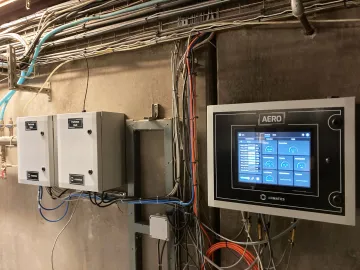
Steel Forging Facility Maximizes Investment in Compressed Air System

When a company is considering making an investment of more than a million dollars in system upgrades, it is crucial for them to review all options to get the best return. By exploring energy efficiency impacts throughout the entire compressed air system, vendors can propose projects resulting in both a larger sale for them and increased financial benefits for their customers, while still meeting capital expenditure guidelines. This “best of both worlds” scenario was evident when a foundry in the Midwest was evaluating options for replacing its steam system used to drive the plant’s forging hammers.

Steel Mill Energy Audits Include Air Compressor Performance Testing

EnSave, an energy auditing company based in Richmond, Vermont, recently performed compressed air audits at two facilities of a leading U.S. steel manufacturer. Both plants are mills that melt, cast, and roll steel to produce a variety of products, including: rebar, merchant bar, steel flats, rounds, fence posts, channel bar, steel channels, steel angles, structural angles and structural channels. These products are used in a diverse group of markets, including: construction, energy, transportation and agriculture. Compressed air is provided at 100 psig in both plants for a variety of applications — from optical sensor cooling to pneumatic cylinders for stacking finished products.

What to Expect from an Effective Compressed Air Audit

Compressed air has moved to higher visibility in the energy conservation field, and the buzzwords abound: “the fourth utility” — “your most expensive utility” — “eight times more expensive than electricity” — “a quarter-inch leak costs \$9,000 in wasted energy.” This greater awareness has also produced compressed air auditors that are springing up like summer dandelions. With audits available from many sources, it is important to understand what plant operations, engineers and maintenance managers should expect from a complete audit — or more aptly — a complete air system review.

Flow Metering Demand-Side Projects in Large Compressed Air Systems

As a reader of this journal, you are well aware that large compressed air systems often have significant wasted air — often from leaks — that represent tens of thousands of dollars of waste per year. However, it is our experience that the so-called “low-cost” measures identified often go un-repaired, while other more costly capital projects get funded. Why? With an ROI of a half year or less, they seem like IQ tests to many compressed air auditors.

Desiccant Air Dryer Control: Seeing Isn’t Always Believing

Many thousands of dollars of annual electrical savings are being achieved worldwide using special purge reduction controls on desiccant air dryers. These controls reduce the expensive purge air that must flow through the dryer to regenerate the desiccant beds. But, unexpected problems with these controls can cause hidden problems that can reduce or eliminate the savings.

The Relationship Between Pressure and Flow in a Compressed Air System

After more than 25 years in the compressed air industry, it still amazes me that many plant personnel and even those who sell compressed air products for a living don’t fully understand the relationship between flow, or volume (cfm), and pressure (psig). Walk into many body shops or small manufacturing plants, and you will find the compressor operating at an elevated pressure to satisfy the “demand.” If a plant has low air pressure on the production floor, what is the first thing that the maintenance professional does? You guessed it: He or she “jacks” up the pressure on the compressor, not realizing that he or she made the problem worse.

Inlet Air Temperature Impacts on Air Compressor Performance

There is a partly true idea floating around some plant maintenance circles that “compressed air is free.” Readers of this journal know that isn’t true. But, what if non-compressed air could be seen as “free?” Is there something we can get for free from nature to reduce the cost of our compressed air? What if lower temperature intake air was nature’s gift? What if all we need is a bit of tin to duct air from a different source?

Five Demand-Side Projects at a Potato Chip Plant

A major snack food manufacturer spends an estimated \$148,220 annually on energy to operate the compressed air system at its food processing plant located in the Mid-Atlantic area.  As electric rates rise from their current average of 8 cents per kWh, their annual expenditure will only increase.

CAPS Inc. Audit Turns Off 100 hp in Air Compressors

Compressed Air Performance Specialists (CAPS Inc.) is a compressed air consultancy located in Calgary, Alberta. In its most recent compressed air project, the company reduced a 200-hp, multi-compressor system down to a single, 100-hp variable speed drive (VSD) air compressor utilizing 75 hp of compressor energy (kWh), resulting in \$70,000 in annual energy savings.

Improvements at Canada Bread Save 58% in Energy Costs

Replacing air compressors, dryers and filters with more efficient models has saved electrical costs and improved compressed air reliability at the Canada Bread plant in Winnipeg, Manitoba. In addition to this, plant personnel found some additional savings by reducing air leakage and eliminating inappropriate uses. As a result, the plant reduced its compressed air electrical costs by 58 percent and qualified for a utility incentive.

Compressor Controls

Wood-based materials manufacturing plant transformed its compressed air system from an invisible

Piping Storage

Efficient compressed air distribution depends on proper piping design to balance flow, pressure and

End Uses

Without compressed air monitoring, up to 30% of the compressed air generated goes to waste. This

Pressure

Before CAGI data sheets were created, air compressor distributors and their customers could only go

Air Treatment/N2

Producing nitrogen locally is an excellent way to reduce nitrogen costs and ensure a continuous

Leaks

Hyster-Yale’s Greenville, North Carolina, plant reduced compressed air waste through employee-driven

Pneumatics

Current Good Manufacturing Practices (cGMPs) under FSMA CFR Title 21 117.40 is the cornerstone of

Vacuum/Blowers

There is no single right approach to putting the necessary volume and pressure of air in the pipe to