Industrial Utility Efficiency

System Assessments

We asked a hand-selected list of original equipment manufacturers, independent compressed air system sales and service companies, manufacturing plants and independent system auditors to share their thoughts, highlighting the changes they’ve seen over the past 20 years, then predicting what the next 20 years will bring.

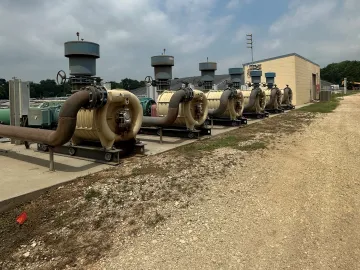
Load-Sharing Centrifugal Compressor Control Saves Energy

This article reviews portions of an audit report commissioned to survey the condition of a compressed air system in a factory located in the U.S. The objective of this study is to determine the current operating conditions and make recommendations for improvement based upon application of industry recognized best practices. Due to article space limitations, this article will focus on portions of the over-all audit report provided to the factory.

Air System Pressure Influences Compressor Power - Part 1: System Pressure’s Influence On Rotary Screw Air Compressors

Energy conservation measures (ECMs) associated with compressed air have received a significant amount of attention over the years, mostly due to a reasonably short financial return compared with other energy-consuming equipment. Over time, many of the recommended corrective actions to reduce compressed air energy consumption were simplified so much that they did not lead to positive results. One of the most common compressed air ECMs is reducing system pressure, and it leverages the best practice calculation —.5 percent power per psi — outlined in the Department of Energy’s Compressed Air Challenge. This article highlights more common issues associated with estimating energy conservation resulting from changing system pressure.

Pneumatic Conveying Energy Assessment Saves $321,000

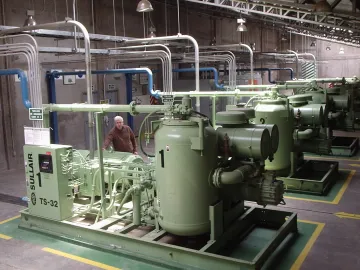
The plant air system consists of eight, single-stage, lubricated, Sullair rotary screw compressors. All units are in good working order.  Units 2, 3, 4 and 7 are water-cooled and units 6, 8, 9, 10 and 11 are air-cooled. The main plant air system has two primary compressed air dryers, a Thompson Gordon model TG 2000 refrigerated dryer, and a Sullair model SAR 1350 heatless desiccant dryer.  Both units are working according to their design. The TG 2000 uses approximately 11.2 kW and is a non-cycling type unit, and the SAR 1350 uses approximately 200 cfm of purge air to regenerate the wet tower. 

Optimize a Compressed Air System with Highly Fluctuating Air Demand

When an air system requires large quantities of air (ca. >100 m3/min) and air demand highly fluctuates during the day, it is common belief among end-users that large variable speed screw compressors can deliver significant savings opportunities by precisely matching the compressed airflow to the system’s demand. Where the daily flow demand has a variability of up to 90% of the maximum air demand, the study compares the energy consumption of six alternative solutions in terms of number of installed compressors, compressor sizes and types of compression technologies (i.e., oil free centrifugal and oil free rotary).  

Factory Reduces Compressed Air Energy Costs by 61%

This factory, located in the U.S. northeast, spent an estimated \$120,000 annually on energy to operate the compressed air system. The group of projects recommended below reduced these energy costs by \$73,700 or 61% of current use. These estimates are based upon a blended electric rate of \$0.114/kWh.

Pneumatic Circuit Analysis for Energy Efficiency

Currently, and for good reason, much attention is being focused on the conservation of energy. Compressed air, like electricity and gas, is an energy resource. It has often been referred to as the third utility. As with all energy sources, our global environment demands that it be conserved and used wisely.

DO Control System and Turbo Blowers Optimize Energy Use at a WWTF

Every municipality and utility is facing the reality of rising energy costs. In 2010, the Town of Billerica, MA, which is located 22 miles northwest of Boston with a population of just under 40,000 residents, engaged Process Energy Services and Woodard & Curran to conduct an energy evaluation of the Town’s Wastewater Treatment Facility (WWTF) and pump station systems sponsored by National Grid. The objective of the evaluation was to provide an overview of each facility system to determine how electrical energy and natural gas were being used at the facility and to identify and develop potential costsaving projects.

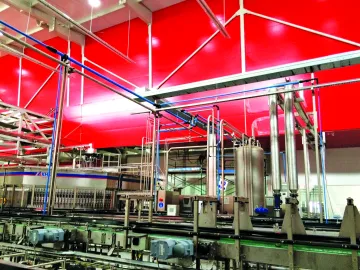
Blow Molding Equipment: Review and Process Steps to Minimize Energy Usage

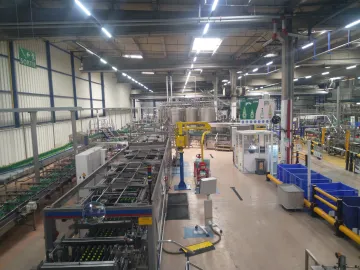
Stretch blow molding equipment requires a significant amount of energy—both compressed air and electrical—to produce bottles. Creating an effective and efficient process, as well as monitoring and maintaining optimal process settings, can result in significant energy cost reduction. These efforts will also help produce containers that meet all of the required quality standards.

Compressed Air Audit of a Powder Coating System

The facility generates compressed air with six (6) air compressors of various sizes located in three different compressor rooms. In recent years, the entire system converted to desiccant air dryers. Available equipment from other facilities has been utilized. The following is the layout of the facility showing the locations of the compressor rooms.

Plastic Extruder Saves $116,000 in Energy Costs

This plastic extrusion factory spent an estimated \$180,711 annually on energy to operate the compressed air system at their Midwestern facility. Based on the air system operating 8,760 hours per year, the group of projects recommended below could reduce these energy costs by an estimated \$116,520 or 67% of current use. Estimated costs for completing the recommended projects total \$20,100. This figure represents a simple payback period of 2 months.

Compressor Controls

Wood-based materials manufacturing plant transformed its compressed air system from an invisible

Piping Storage

Efficient compressed air distribution depends on proper piping design to balance flow, pressure and

End Uses

Without compressed air monitoring, up to 30% of the compressed air generated goes to waste. This

Pressure

Before CAGI data sheets were created, air compressor distributors and their customers could only go

Air Treatment/N2

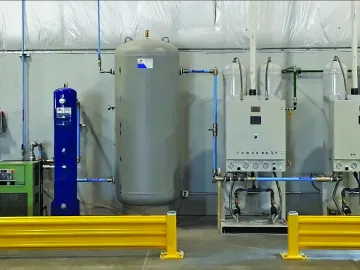
Producing nitrogen locally is an excellent way to reduce nitrogen costs and ensure a continuous

Leaks

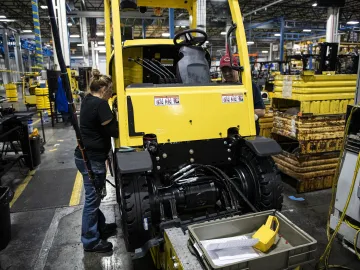
Hyster-Yale’s Greenville, North Carolina, plant reduced compressed air waste through employee-driven

Pneumatics

Current Good Manufacturing Practices (cGMPs) under FSMA CFR Title 21 117.40 is the cornerstone of

Vacuum/Blowers

There is no single right approach to putting the necessary volume and pressure of air in the pipe to