Industrial Utility Efficiency

System Assessments

We asked a hand-selected list of original equipment manufacturers, independent compressed air system sales and service companies, manufacturing plants and independent system auditors to share their thoughts, highlighting the changes they’ve seen over the past 20 years, then predicting what the next 20 years will bring.

Four Compressed Air Demand Reduction Projects

A large food manufacturing operation in the U.S. Midwest spends $529,000 annually on energy to operate the compressed air system.  The plant currently has two supply-side systems that operate and feed two different distribution networks at two different pressures. One compressed air system is at 115 psig (medium pressure system) and the low-pressure system is at 30 psig. The compressed air equipment for both systems is located in four areas throughout the facility.  

Improving the Efficiency of Pumping Systems through Pump System Optimization

The U.S. Department of Energy’s 2002 Motor Market Assessment established that pumping systems offer the greatest optimization potential of all types of fluid systems, with potential savings up to 75% and an average net savings of 20.1%. In this article, The Hydraulic Institute defines the steps for a pump system optimization.

Beyond Leaks—Factory Continues Reducing Compressed Air Demand

A significant manufacturing operation, in the U.S. Midwest, had successfully deployed a compressed air leak management program. This on-going leak management program, along with tuning the air compressor control system, had delivered energy savings and a more reliable compressed air system.

Improve Process Efficiency and Reduce Energy Use with Compressed Air Monitoring

Without compressed air monitoring, up to 30% of the compressed air generated goes to waste. This waste occurs for several reasons, including leaks caused by failures at joints and tubes, exposure to vibration and normal component wear, and the suboptimization of machines and devices. Continuous monitoring capabilities allow operators to detect leaks and other anomalies in their early stages. By addressing pneumatic issues before they can grow, companies can reduce compressed air use by 20% to 30%.  

Defining the Purity of Facility Generated Nitrogen Gas

While oxygen is unquestionably the most important gas in our atmosphere, as it is essential for most animals and human life, nitrogen is the most widely used atmospheric gas.  Nitrogen is the go-to gas for countless industrial, medical, and scientific applications. This is because nitrogen is in vast supply, inert, and possesses the desirable characteristics of being colorless, odorless, and tasteless. The purity of nitrogen significantly affects the outcome of the application for which it is used and how the industry measures the purity of nitrogen gas is the focus of this article.       

Using Air Storage to Balance Capacity in a Reciprocating Air Compressor Installation

One of the components frequently included in a reciprocating air compressor is an air receiver, often referred to as an air tank.  Proper air storage is a critical component of intermittent duty cycle because for brief moments, the system can provide more compressed air than would otherwise be provided by the compressor pump. The capacity of compressed air piping also contributes to the total capacity of the air storage system.

DENSO Compressed Air Leak Detection Program Drives CO2 Reduction Results

Given that compressed air leak management programs are meant to save energy, reduce CO2 emissions, and generate ROI, DENSO’s Maryville, Tennessee, manufacturing facility can definitively say it has scored a trifecta when it comes to results – and reaped benefits beyond hard numbers alone.

The Myth of Leak Repairs

When fundamentals like leak detection are neglected, best practices begin to slip. Inefficiency does not happen instantaneously, but slowly becomes the new norm as leaks or open blows are overlooked. Maintaining peak compressed air system efficiency is essential to streamlined operations. Better yet: it doesn’t need to be complicated. A clear, concise, and actionable plan will prevent negligence and keep your operation up-to-date on energy efficiency and cost savings.

Crimping Pipe Nozzles for Improved Efficiency

Blowing a jet of compressed air at an object is a common but “poor” use of compressed air. Often the blowing nozzle is a piece of pipe on a hose with a manual valve for control. This quickly solves a production problem when a more efficient factory made nozzle is either physically too big, too expensive, or not on site when needed. Retrofitting with factory made nozzles is often ruled out by for the same reasons, and the time needed by managers and fitters to change a nozzle for often little gain in production.

When to Repair vs. Replace Your Vacuum Pump: A Guide

If your vacuum pump is malfunctioning, you are faced with a choice: repair or replacement. Our guide will take you through both options and provide recommendations on when it makes sense to repair vacuum pumps and when to replace them. We will also take a look at how to spot and diagnose common issues before they lead to system failure. Whatever the path of action, the decision to repair or replace always begins with testing and diagnosis. A factory-trained service technician who specializes in vacuum pump services inspects the equipment and identifies the problem.

Compressor Controls

Wood-based materials manufacturing plant transformed its compressed air system from an invisible

Piping Storage

Efficient compressed air distribution depends on proper piping design to balance flow, pressure and

End Uses

Without compressed air monitoring, up to 30% of the compressed air generated goes to waste. This

Pressure

Before CAGI data sheets were created, air compressor distributors and their customers could only go

Air Treatment/N2

Producing nitrogen locally is an excellent way to reduce nitrogen costs and ensure a continuous

Leaks

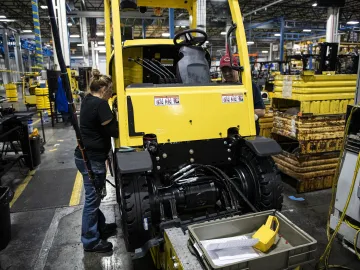
Hyster-Yale’s Greenville, North Carolina, plant reduced compressed air waste through employee-driven

Pneumatics

Current Good Manufacturing Practices (cGMPs) under FSMA CFR Title 21 117.40 is the cornerstone of

Vacuum/Blowers

There is no single right approach to putting the necessary volume and pressure of air in the pipe to