Industrial Utility Efficiency

System Assessments

We asked a hand-selected list of original equipment manufacturers, independent compressed air system sales and service companies, manufacturing plants and independent system auditors to share their thoughts, highlighting the changes they’ve seen over the past 20 years, then predicting what the next 20 years will bring.

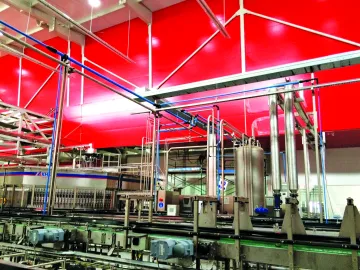
A View From Southeast Asia. A Pharmaceutical System Assessment

We conducted a comprehensive compressed air system assessment. Opportunities to improve the system were found in the main piping system, in reducing pressure losses in the mold machine piping, and with the high ambient temperatures found in the compressor room. We estimated energy savings of 403,500 kWh per year for a power savings of \$65,000 per year. The total projects costs were \$48,000 for a simple ROI of nine (9) months.

Three Demand-Side Projects at a Pharmaceutical Plant

This pharmaceutical plant spends \$265,100 annually on energy to operate the compressed air system at their facility. This figure will increase as electric rates are projected to be raised from their current average of 7.7 cents /kWh. The set of projects identified in the compressed air system assessment could reduce these energy costs by \$139,300 per year (52%).

A Pharmaceutical Compressed Air System Audit

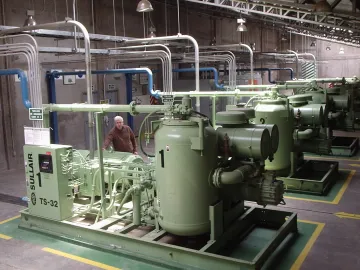
This West Coast pharmaceutical facility has a very clean and organized compressed air system. All equipments is in good working order in the compressor room. The compressor room itself is very clean and well ventilated. The management requested a compressed air system audit for two reasons:

Compressed Air System Improvements

An industrial manufacturing plant (producing commercial water meters and valves) had engaged us to conduct an ‘on-site’ Energy & Utilities Assessment of their facility. The annual ‘spend’ for electricity, natural gas, fuels and water was about \$ 2.0 million.

Industrial Sandblasting – Where Does All the Air Go?

“Sandblasting” is one of the oldest and most used methods of metal treatment. Various abrasive materials may be loaded manually or by a vacuum system pulling the “grit” from a storage tank. A control valve then operates with the compressed air (bypassing the vacuum pump), being forced into the tank pressurizing the receiver. When the high pressure compressed air goes out the discharge line, it pulls the appropriate amount of grit with it to effectively impinge against the targeted metal surface.

Dealing with High-Volume Intermittent Demands

In many industrial plants there are one or more applications with intermittent demands of relatively high volume. One example is the use of dense phase transport systems to convey the cement. Dense phase systems can cause severe dynamic pressure fluctuations affecting quality of the end product in a plant.

Real-World $mart Sequencer® Controls

The \$mart Sequencer® is an air compressor control system designed to reduce a plant’s energy costs by continuously monitoring system demand and automatically selecting the most energy efficient combination of available air compressors.

Compressed Air Controls

Compressed air system controls match the compressed air supply with system demand and are one of the most important determinants of overall system energy efficiency. This article discusses both individual compressor control and overall system control of plants with multiple compressors. Proper control is essential to efficient system operation and high performance.  

Starting a Long Distance Relationship with Your Compressed Air System

When was the last time you visited your compressor room? A week ago? Several weeks ago? If you are like many, you went in for the last scheduled maintenance interval and have rarely been back since. Air compressors, dryers and other air system components have become more reliable and self sustaining from a maintenance standpoint with each generation, requiring less and less human intervention.

Compressor Sequencer Problems and Solutions

The goals of this article are to show why sequencers often have problems, and to demonstrate how avoid problems by proper system integration and controls design.

Compressor Controls

Wood-based materials manufacturing plant transformed its compressed air system from an invisible

Piping Storage

Efficient compressed air distribution depends on proper piping design to balance flow, pressure and

End Uses

Without compressed air monitoring, up to 30% of the compressed air generated goes to waste. This

Pressure

Before CAGI data sheets were created, air compressor distributors and their customers could only go

Air Treatment/N2

Producing nitrogen locally is an excellent way to reduce nitrogen costs and ensure a continuous

Leaks

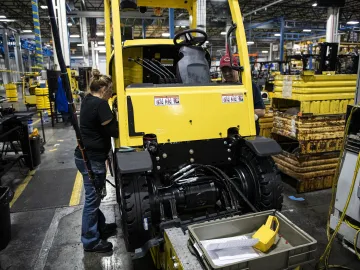
Hyster-Yale’s Greenville, North Carolina, plant reduced compressed air waste through employee-driven

Pneumatics

Current Good Manufacturing Practices (cGMPs) under FSMA CFR Title 21 117.40 is the cornerstone of

Vacuum/Blowers

There is no single right approach to putting the necessary volume and pressure of air in the pipe to