Industrial Utility Efficiency

System Assessments

We asked a hand-selected list of original equipment manufacturers, independent compressed air system sales and service companies, manufacturing plants and independent system auditors to share their thoughts, highlighting the changes they’ve seen over the past 20 years, then predicting what the next 20 years will bring.

Demand Versus Supply, Parts l and ll

The purpose of this article is to investigate the cause and effect that can occur when you reduce demand with no supply changes and the alternative which will produce positive, long term results which you can take to the bank.

Mattei Dresses Up a Textile Compressed Air System

This textile plant uses compressed air in their knitting, sewing, and dye house operations and needed a system designed for the significant fluctuations in demand. Compressed air demand profiles were placed into four segments; 1st shift peak demand and minimum demand, and 2nd shift peak demand and minimum demand.

Energy Saving Opportunities in Blowoff Applications

Assessing payback on engineered air nozzle and blower upgrades There are a variety of means factories can use to remove or “blowoff” moisture from a package. Open tubes or drilled pipe are often viewed as simple low-cost methods. However, there are considerable drawbacks to these approaches, most notably – increased operating expense. While they may be convenient and inexpensive in the short term, these approaches often cost 5-7 times more to operate than preferred alternatives.

Optimizing Pneumatic Systems for Extra Savings

Compressed air users looking for energy reduction often identify their air compressors as a prime area for savings potential. But …what about end uses? There are a large number of obvious measures that can be implemented, such as leakage reduction, reducing open blowing and eliminating inappropriate uses..however, there are other more technical opportunities available that involve properly specifying or redesigning existing pneumatic circuitry in compressed air operated machines and processes.

OEM MACHINE DESIGN. Pneumatics: Sizing Demand Users

Most systems are sized on the supply side at many times more volume and significantly higher pressure than is actually necessary to support the real demand plus a fudge factor generally created out of fear. I am sure that had the OEM defined what is not only minimally necessary in terms of mass flow at density (pressure and temperature), but also with the intent of the highest possible efficiency, we would approach things very differently.

A Kroger Company Bakery Saves Energy

Recently, The Kroger Company’s Indianapolis bakery identified the use of compressed air in a blow-off and conveyor gap transfer as a major source of energy loss and cost waste. According to the U.S. Department of Energy, “inappropriate use” of compressed air like blow-off produces high pressure atmosphere bleed leading to significant energy loss and unnecessary operational costs. Carrying a 10-15% efficiency return (according to the Department of Energy), compressed air applications can often be achieved more effectively, efficiently and less expensively with alternative solutions using a high flow rate and moderate pressure.

Compressed Air Leak Measurement Leads to Savings

This Midwestern prepared food company now spends \$269,463 annually on energy to operate their compressed air system. This figure will increase as electric rates are raised from their current average of 6.2 cents per kWh. The set of projects recommended below will reduce these energy costs by \$112,902 or 41%. In addition, these projects will enhance productivity and quality and reduce equipment maintenance costs. Estimated costs for completing the projects total \$146,102, which represents a simple payback of 15.6 months.

Protection Against Water Hammer Damage

One major problem that causes severe damage or system failure for any water treatment station is water hammer shock waves. “Water Hammer” or “Hydraulic Shock” is a pressure surge or shockwave resulting when a fluid (usually a liquid but sometimes also a gas) in motion is forced to stop or change direction suddenly (momentum change). The reversed momentum then continues to multiply the further it travels before being stopped.

Blower Advancements for the Wastewater Industry

"The Numbers Don’t Lie". It’s a popular saying everyone has heard before, applied to a variety of situations – political statistics, figures backing up an athlete’s performance and budget data. Thirty percent is a big number. Applied to the above scenarios, it could entail a landslide victory or a hitter gaining entry into the Baseball Hall of Fame. But just imagine, if the manager of a wastewater treatment facility were to trim 30 percent from their operating costs, he or she might also consider that a landslide victory of their own.  

Compressed Air System Analysis

A comprehensive compressed air system analysis should include an examination of both air supply and usage and the interaction between the supply and demand. Auditors typically measure the output cfm of a compressed air system and the input kW, calculate energy consumption in kilowatt-hours, and determine the annual cost of operating the system. The auditor may also measure total air losses caused by leaks and locate those that are significant.

Compressor Controls

Wood-based materials manufacturing plant transformed its compressed air system from an invisible

Piping Storage

Efficient compressed air distribution depends on proper piping design to balance flow, pressure and

End Uses

Without compressed air monitoring, up to 30% of the compressed air generated goes to waste. This

Pressure

Before CAGI data sheets were created, air compressor distributors and their customers could only go

Air Treatment/N2

Producing nitrogen locally is an excellent way to reduce nitrogen costs and ensure a continuous

Leaks

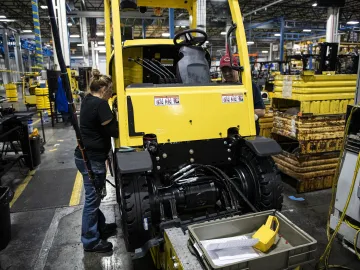
Hyster-Yale’s Greenville, North Carolina, plant reduced compressed air waste through employee-driven

Pneumatics

Current Good Manufacturing Practices (cGMPs) under FSMA CFR Title 21 117.40 is the cornerstone of

Vacuum/Blowers

There is no single right approach to putting the necessary volume and pressure of air in the pipe to