Industrial Utility Efficiency

System Assessments

We asked a hand-selected list of original equipment manufacturers, independent compressed air system sales and service companies, manufacturing plants and independent system auditors to share their thoughts, highlighting the changes they’ve seen over the past 20 years, then predicting what the next 20 years will bring.

Moisture: the Assassin in Compressed Air Installations

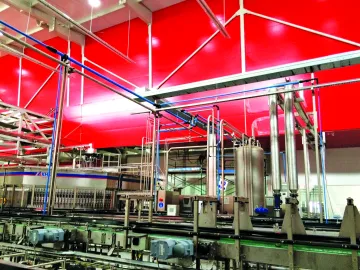
Moisture can freeze in compressed air systems and cause rust and pitting in pipes and components. It can also flush out the lubricant resulting in accelerated tool wear and damage to valves and cylinders. Moist air is also a rewarding breeding ground for bacteria, which especially in the food and pharmaceutical industries can lead to product rejection and costly production downtime. It is therefore strange that many companies limit themselves to measuring only basic quantities such as pressure, flow and (absorbed) power.

Compressed Air System Design for Dust Collectors

The dust is collected on the bag or fingers, and when the cake of dust is of appropriate thickness and structure, a pulse or pulses of compressed air hits or shocks the bag and knocks the cake off. This pulse may sometimes be accompanied by physical shaking and even reverse air flows, depending on design.

Achieving Sustainability Targets by Optimizing Compressed Air Use

By monitoring compressed air consumption using smart pneumatic sensors, companies can reliably reduce energy use and emissions.  The digital transformation of pneumatic systems is one critical way that companies can improve operational sustainability. Advanced airflow-sensing technology provides compressed air monitoring and valuable insights that allow companies to control and significantly reduce the energy used to produce compressed air as well as related carbon emissions.

Compressed Air Systems and Rocket Science

Would you believe the same technology used in the launching and controlling of a space rocket is also used in your compressed air system? Yes, in some cases, “rocket science” helps to solve problems in compressed air systems and ensures the performance of the installed units. In this article, we are going to explain the technology called the “Sonic Nozzle”, that combines a space rocket thruster and your compressed air system. Additionally, we are going to walk through a case study, step by step, to show how it works.

Metal Fabricator Measures Nitrogen Use, Receives a Surprise

Nitrogen is used in many facilities for a variety of purposes. The most common source of N2 is through the use of bulk liquid storage. A plant owner was recently surprised to learn that a large portion of his N2 was disappearing, without ever being used by his production process. This article discusses where it went and what we could do about it.

Whiskey Distillery Compressed Air Study Saves Energy

A premium whiskey distillery was seeking to renew their compressed air system and meet their corporate mandate in making their production facility more efficient. The first step on the road to improvement was having their compressed air system assessed. This article discusses some of the findings of the system study, which saved significant energy, improved system reliability, and captured a significant utility incentive to help with the study costs and the cost of a new compressor.

Eagle Mine Redesigns Compressed Air System for Uptime Gains

When the design capabilities of an installed compressed air system didn’t align with real-world production needs at its ore processing mill in northern Michigan, Eagle Mine decided to move beyond theoretical compressed air concepts and deal in reality. After thorough analyses of its compressed air challenges and implementing a variety of solutions, the team at the mill bolstered the operation’s ability to efficiently mill approximately 2,200 metric tons of ore per day.  

Commercial Bakery Compressed Air Audit Optimizes the Constituents of Demand

The current cost to operate the compressed air system is \$139,100 annually, and the proposed measures will reduce it by \$50,700 annually. The proposed cost to complete the measures is $47,600 providing a simple payback of 11 months. The cost included in the Action Plan includes engineering, project assistance, services to maintain the gains, and a 10% contingency.  

Three Ways To Make Packaging Lines More Sustainable

Sustainability is a high priority for today’s consumer packaged goods (CPG) companies. Driven by environmental responsibility, government regulations and customer preferences, CPGs are actively seeking ways to decarbonize their packaging lines and use eco-friendly packaging materials. Many have started monitoring the energy consumption of their equipment in real time and upgraded critical areas of their packaging processes using two key technologies: pneumatics and ultrasonic welding. 

Compressed Air Assessment at Grundfos Finds Big Savings

Analysis of the pressure data logging showed that, while the variable speed drive compressor maintained a constant discharge pressure near 120 psi, the pressure at various critical points fell to as low as 85 psi during peak production operations. General pressure in the plants, especially Plant 2, fluctuated between 102 and 112 psi, showing that the pressure/flow control valve was not regulating properly, and that Plant 2 lacked enough general storage volume to support transient flows.  

Compressor Controls

Wood-based materials manufacturing plant transformed its compressed air system from an invisible

Piping Storage

Efficient compressed air distribution depends on proper piping design to balance flow, pressure and

End Uses

Without compressed air monitoring, up to 30% of the compressed air generated goes to waste. This

Pressure

Before CAGI data sheets were created, air compressor distributors and their customers could only go

Air Treatment/N2

Producing nitrogen locally is an excellent way to reduce nitrogen costs and ensure a continuous

Leaks

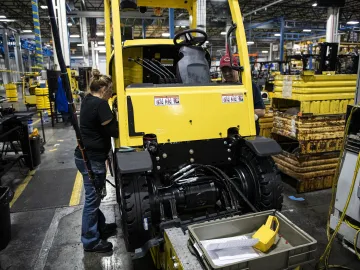
Hyster-Yale’s Greenville, North Carolina, plant reduced compressed air waste through employee-driven

Pneumatics

Current Good Manufacturing Practices (cGMPs) under FSMA CFR Title 21 117.40 is the cornerstone of

Vacuum/Blowers

There is no single right approach to putting the necessary volume and pressure of air in the pipe to